
Last updated: September 2026
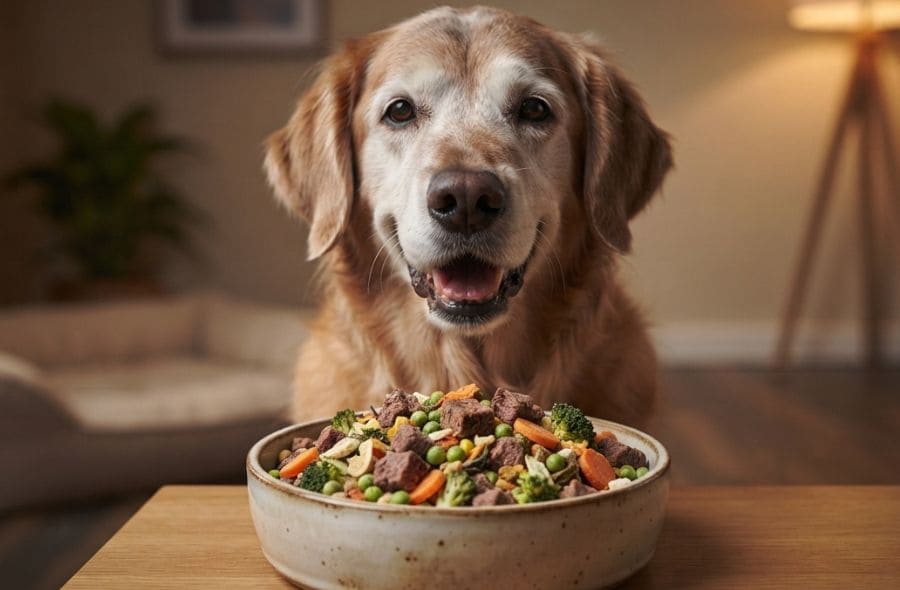
If your senior dog has been leaving kibble in the bowl lately, or seems less interested in mealtime than they used to be, you’re not imagining it. Appetite and digestion both shift with age, and a lot of owners are quietly switching formats to fix it. Air-dried dog food for senior dogs is one of the fastest-growing choices in this space right now, and it’s worth understanding what it actually is before you decide if it’s right for your dog.
This isn’t another “raw is best” argument. It’s a genuinely different processing method that sits between kibble and raw, and for a lot of aging dogs, that middle ground solves real problems.
What Air-Dried Dog Food Actually Is
Air-dried dog food for senior dogs is made by slowly dehydrating raw or lightly cooked ingredients at low temperatures, rather than extruding them under high heat and pressure like standard kibble.
The result looks a bit like jerky or dense chunks rather than round kibble pieces. Because it skips the high-heat extrusion process, more of the original nutrients, texture, and aroma tend to survive the process compared to conventional dry food.
This matters more for senior dogs than most people realize. Aging noses and taste buds are often less sensitive, and a food that smells and tastes more like real meat can make a real difference for a dog who’s started turning their nose up at dinner.
💡 Vet Technician Note: If your senior dog has suddenly gone from a good eater to a picky one, don’t assume it’s just “getting old.” Sudden appetite drops can also signal dental pain, nausea, or other medical issues, so it’s worth a quick vet check before assuming a food switch alone will fix it.
7 Proven Benefits of Air-Dried Dog Food for Senior Dogs
Together, these seven benefits explain why air-dried dog food for senior dogs has become such a fast-growing category this year.
1. Easier on Sensitive Digestion
The gentler processing method tends to preserve more natural enzymes and structure in the ingredients, which some senior dogs digest more comfortably than heavily processed kibble. If your dog already deals with a sensitive stomach, this is one of the more noticeable differences owners report.
2. Higher Palatability for Reduced Appetite
Air-dried food typically has a stronger, more natural smell and flavor than kibble, since it isn’t blasted with high heat that can cook off aroma compounds. For a senior dog eating less than they used to, that extra appeal at the bowl can matter more than any nutrition label.
3. Softer Texture Without Going Fully Wet
Air-dried pieces are generally softer and easier to break apart than hard kibble, without being a wet, messy can of food. This can be genuinely helpful for senior dogs dealing with dental disease or missing teeth — if your dog has ever hesitated at mealtime because chewing seems uncomfortable, this is worth reviewing alongside the broader picture in dental care for senior dogs.
4. Higher Protein Density Per Bite
Because air-drying removes moisture rather than diluting ingredients with fillers, these foods often pack more protein and animal-based nutrition into a smaller volume. That matters for senior dogs, since maintaining adequate protein intake is one of the most overlooked factors in unexplained weight loss as dogs age.
5. Gentler on an Already-Working Gut
Senior dogs with ongoing digestive sensitivity often do better on simpler, less processed formulas. If your dog’s system already needs extra support, pairing a gentler food format with a quality probiotic can reinforce digestive balance rather than relying on the food alone to solve everything.
6. Fewer Fillers and Additives
Because the process relies on the ingredients themselves for shelf stability rather than heavy preservatives and binders, many air-dried formulas end up with shorter, simpler ingredient lists. For owners who’ve started reading pet food labels as carefully as their own, this is a meaningful selling point.
7. Longer Shelf Life Than Fresh or Raw
Unlike raw or fresh refrigerated diets, air-dried food is shelf-stable at room temperature once sealed, which makes it far more practical for everyday feeding without a dedicated freezer or fridge space. It offers a lot of raw food’s appeal without raw food’s storage and handling demands.
A Real-Life Example
One PawzyVibe reader switched her 12-year-old Beagle, Winston, to air-dried food after months of him picking at his kibble and losing a noticeable amount of weight. Within two weeks of the switch, paired with a slow transition, he was finishing meals again and his energy visibly picked back up.
Air-Dried vs. Kibble vs. Freeze-Dried: What’s the Real Difference?
It’s easy to lump these formats together, but the processing methods genuinely differ.
- Kibble is cooked under high heat and pressure (extrusion), which is efficient and shelf-stable but can reduce some nutrient and aroma quality.
- Air-dried food is slowly dehydrated at low temperatures, preserving more of the original texture and smell without needing refrigeration.
- Freeze-dried food removes moisture through a different, faster process (freezing then vacuum-drying), often resulting in a lighter, crispier texture that needs rehydrating before serving for some senior dogs.
None of these is universally “best” — the right choice depends on your dog’s specific digestion, dental comfort, and appetite patterns.
💡 Vet Technician Note: Air-dried food is often calorie-dense per cup compared to kibble. If you switch, don’t just match your old scoop size — check the feeding guidelines on the new bag, since overfeeding a denser food is an easy way to accidentally pack on weight in a senior dog who already needs fewer calories.
How to Transition Your Senior Dog Safely
Switching to air-dried dog food for senior dogs too quickly is one of the most common reasons a good food choice gets blamed for problems it didn’t cause.
According to PetMD’s guidance on switching dog food, a gradual transition is strongly preferred over a quick switch to avoid digestive upset, and any dog showing vomiting, diarrhea, or appetite refusal beyond a day should be seen by a vet.
A safe general approach for senior dogs:
- Days 1-3: 25% new food, 75% current food
- Days 4-6: 50% new food, 50% current food
- Days 7-9: 75% new food, 25% current food
- Day 10: 100% new food
Senior dogs with a history of sensitive digestion may need to stretch this out closer to two weeks rather than rushing it.
💡 Vet Technician Note: Watch stool quality more closely than appetite during a transition. A senior dog can seem perfectly happy eating a new food while their stool tells a different story — loose stool for more than 2-3 days into a transition is a sign to slow down, not push through.
Nutritional needs also shift meaningfully with age. As the American Kennel Club’s guide to feeding senior dogs explains, older dogs generally need a higher protein-to-calorie ratio even as their total calorie needs decrease, which is exactly the balance many air-dried formulas are built around.
Air-Dried Dog Food for Senior Dogs: Quick Reference Table
| Consideration | What to Look For | Why It Matters |
|---|---|---|
| Protein source | Named meat as first ingredient | Supports muscle mass in aging dogs |
| Fat content | Moderate, not excessive | Senior dogs generally need fewer calories |
| Texture | Soft enough to break apart easily | Helps dogs with dental sensitivity |
| Transition pace | 7-10+ days, slower if sensitive | Prevents digestive upset |
| Feeding amount | Follow bag guidelines, not old scoop size | Air-dried is calorie-dense per volume |
| Storage | Sealed, cool, dry place | Maintains freshness without refrigeration |
Frequently Asked Questions
Is air-dried dog food good for senior dogs with sensitive stomachs?
Many senior dogs with sensitive digestion tolerate air-dried dog food for senior dogs well, since the gentler processing preserves more natural structure than heavily extruded kibble. However, every dog is different, and a slow transition is essential regardless of format.
How is air-dried dog food different from freeze-dried?
Air-drying uses slow, low-temperature dehydration, while freeze-drying removes moisture through a rapid freeze-then-vacuum process. Freeze-dried food is often lighter and crispier, sometimes requiring rehydration, while air-dried tends to have a denser, chewier texture.
Can air-dried dog food help a senior dog who’s losing weight?
It can help in some cases, particularly when reduced appetite is the main issue, since air-dried food is often more palatable and protein-dense. That said, unexplained weight loss in a senior dog should always be checked by a vet first to rule out underlying medical causes.
Is air-dried dog food more expensive than kibble?
Generally, yes. The slower processing method and higher-quality ingredients typically used in air-dried formulas mean a higher price per pound compared to standard kibble, though feeding amounts are often smaller due to calorie density.
How long does it take to switch a senior dog to air-dried food?
A standard transition takes 7-10 days, but senior dogs with sensitive digestion or a history of food intolerance may need closer to two weeks. Watching stool quality throughout the switch is the best way to know if you’re moving too fast.
This article is for informational purposes and is not a substitute for professional veterinary advice. If your senior dog shows sudden appetite changes or digestive symptoms, contact your veterinarian promptly.
PawzyVibe participates in the Amazon Associates program. As an Amazon Associate, we earn from qualifying purchases at no additional cost to you.