
Last updated: October 2026
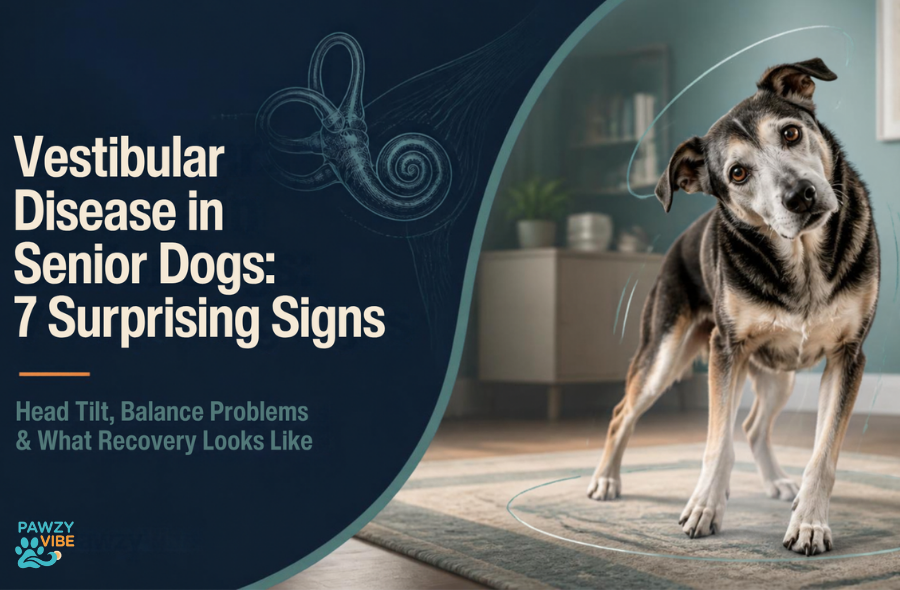
One moment your dog is fine. The next, their head is tilted sharply to one side, they’re falling over trying to stand, and their eyes are flicking rapidly back and forth. It looks exactly like a stroke — but vestibular disease in senior dogs is usually the real explanation, and the news is often far better than it appears.
This condition is common enough in older dogs that vets simply call it “old dog vestibular disease.” Understanding what it actually is can turn one of the scariest moments of dog ownership into a manageable — and often short-lived — event.
This guide covers what’s actually happening, how it’s different from a stroke, what recovery looks like, and when to still be concerned.
What Is Vestibular Disease in Senior Dogs?
Your dog’s vestibular system — located partly in the inner ear and partly in the brain — is what keeps them balanced and oriented in space. When it malfunctions, the result looks a lot like being seasick or extremely dizzy.
According to Dr. Jerry Klein, Chief Veterinarian for the American Kennel Club, the sudden-onset form that doesn’t progressively worsen and resolves within weeks is known as canine idiopathic vestibular syndrome — one of the most common neurological conditions in veterinary medicine, and especially frequent in older dogs.
“Idiopathic” simply means the exact cause isn’t identified. The leading theory points to age-related changes within the inner ear itself, rather than anything happening in the brain.
💡 Vet Technician Note: If your dog’s limb strength and awareness seem completely normal — they’re just off-balance, not weak — that’s a genuinely reassuring sign pointing toward the inner-ear (peripheral) form rather than something originating in the brain.
Symptoms of Vestibular Disease
Recognizing the symptoms of vestibular disease in senior dogs early is essential, as the onset is almost always sudden and can look alarming:
- A head tilt, usually toward the affected side
- Loss of balance, stumbling, or falling over
- Nystagmus — rapid, involuntary eye movements, usually side to side
- Circling, typically in one direction
- Disorientation or a dazed appearance
- Nausea or vomiting, from the sensation of dizziness
- Reduced appetite, often tied to the nausea
Many owners describe it as their dog suddenly walking “like a drunken sailor.”
Why It’s Often Mistaken for a Stroke
True strokes are actually quite rare in dogs compared to how often they occur in people. On the other hand, vestibular disease in senior dogs is far more common, making it the most likely explanation for sudden balance loss rather than a stroke.
That said, a vet visit is still the right call any time these symptoms appear, since a proper exam is the only way to tell the difference with confidence.
💡 Vet Technician Note: Try to resist Googling your way into a worst-case diagnosis before your vet visit. The dramatic appearance of vestibular disease is completely out of proportion to how seriously most cases actually need to be treated.
What Causes Vestibular Disease?
While idiopathic (unknown cause) vestibular disease in senior dogs is the most common form, several identifiable medical issues can also trigger it:
- Ear infections that have spread into the middle or inner ear
- Hypothyroidism, an underactive thyroid that can affect neurological function
- Tumors or polyps in or around the middle ear
- Trauma, including injury from aggressive ear cleaning
- Central causes like a brain tumor or, rarely, an actual stroke — generally accompanied by additional neurological signs
Since hearing and balance share the same inner-ear structures, dogs already dealing with hearing loss in senior dogs are sometimes more prone to vestibular episodes as well.
Vestibular Disease vs. Seizures vs. Dementia
Owners sometimes struggle to describe what they’re seeing, and these three senior conditions can get mixed up:
| Feature | Vestibular Disease | Seizures | Dementia |
|---|---|---|---|
| Onset | Sudden | Sudden, episodic | Gradual |
| Consciousness | Normal, just disoriented | Often altered or lost | Normal, but confused |
| Key sign | Head tilt, nystagmus | Convulsing, paddling | Gradual behavior change |
| Duration | Hours to weeks | Minutes | Ongoing, progressive |
If your dog’s episode involved convulsions or loss of consciousness rather than balance loss, read our guide on seizures in senior dogs instead — the two are easy to conflate but need different responses. Persistent daytime disorientation that builds gradually, rather than appearing suddenly, points more toward signs of dog dementia.
How Vets Diagnose Vestibular Disease
When evaluating suspected vestibular disease in senior dogs, a comprehensive veterinary diagnosis typically involves:
- A full physical and neurological exam, checking limb strength and awareness alongside balance
- An otoscopic ear exam to check for infection or visible abnormalities
- Bloodwork, including thyroid levels
- An MRI, reserved mainly for dogs with additional neurological signs suggesting a central (brain-based) cause rather than a straightforward inner-ear problem
Recovery and Treatment
Here’s the genuinely good news: most cases of vestibular disease in senior dogs start improving within 48 to 72 hours with proper supportive care.
Supportive care typically includes:
- Anti-nausea medication to help with appetite and comfort
- A calm, hazard-free space — clear away stairs, pool access, or anything your dog could fall into
- Hand-feeding or assistance with food and water if nausea or balance makes eating difficult
- A support harness to help steady your dog on short bathroom trips while they’re at their wobbliest
A mild residual head tilt sometimes lingers even after everything else resolves — this is common and generally doesn’t affect quality of life going forward.
A Real-Life Scenario
When 12-year-old Labrador Winnie suddenly couldn’t stand up straight and kept falling to her left, her owner Marcus was certain she’d had a stroke and rushed her to the emergency vet in tears. A quick exam confirmed normal limb strength and reflexes — just classic vestibular signs — and within a week, Winnie was walking normally again with only a faint head tilt left as a reminder.
Vestibular Disease Action Checklist
| If You Notice… | Do This |
|---|---|
| Sudden head tilt, falling, or rapid eye movements | See a vet promptly to rule out ear infection or other causes |
| Normal limb strength but clear loss of balance | A reassuring sign — likely a peripheral (inner-ear) issue |
| Weakness, paralysis, or major behavior changes alongside it | Mention this immediately — it may point to a central cause needing imaging |
| Nausea or refusal to eat | Ask about anti-nausea medication and hand-feeding support |
| Ongoing wobbliness during recovery | Use a harness for short outings and clear fall hazards at home |
| No improvement after a week | Follow up with your vet — further testing may be needed |
Frequently Asked Questions
Is vestibular disease in dogs the same as a stroke? No, though it can look identical. True strokes are much less common in dogs, while vestibular disease — especially the idiopathic, “old dog” form — is one of the most frequent causes of sudden balance loss in seniors.
How long does vestibular disease last in dogs? Most dogs begin improving within 48 to 72 hours and are close to normal within two to three weeks, though a mild head tilt sometimes lingers.
What causes old dog vestibular disease? The exact cause of the idiopathic form is unknown, though it’s believed to relate to age-related changes in the inner ear. Identifiable causes include ear infections, hypothyroidism, tumors, and trauma.
Does vestibular disease in dogs need treatment? Often just supportive care — anti-nausea medication, a safe environment, and help with eating and drinking. Treatment escalates if an underlying cause like an ear infection or hypothyroidism is identified.
When should I be more worried about my dog’s balance loss? If there’s noticeable limb weakness, paralysis, severe behavior changes, or no improvement after about a week, let your vet know right away, since these can point toward a more serious underlying cause.
Medical Disclaimer: This article is intended for informational purposes only and is not a substitute for professional veterinary diagnosis, advice, or treatment. If your dog suddenly loses balance or develops a head tilt, please consult a veterinarian promptly to confirm the cause.
Amazon Affiliate Disclosure: PawzyVibe is a participant in the Amazon Services LLC Associates Program, an affiliate advertising program designed to provide a means for sites to earn advertising fees by advertising and linking to Amazon.com. As an Amazon Associate, we earn from qualifying purchases at no additional cost to you.