
Last updated: October 2026
A yellowish tinge to your dog’s eyes or gums, sudden appetite loss, or unexplained lethargy can all point toward one of the body’s hardest-working organs quietly struggling: the liver. Liver disease in senior dogs is more common than many owners realize, and catching it early makes a real difference in outcome.
The liver handles an enormous workload — filtering toxins, producing bile for digestion, storing vitamins, regulating blood sugar, and making the proteins your dog needs for blood to clot properly. When it starts to fail, the symptoms can show up almost anywhere in the body, which is exactly why liver disease is so often missed until it’s more advanced.
This guide covers the warning signs, the most common causes in older dogs, how vets diagnose it, and what treatment actually involves.
What Does the Liver Actually Do?
Before the symptoms make sense, it helps to understand just how much the liver is responsible for. It detoxifies the blood, produces bile to help digest fat, stores energy reserves, and manufactures essential clotting proteins.
Because of this wide range of jobs, liver disease can look completely different from one dog to the next, depending on which functions are most affected.
💡 Vet Technician Note: One of the more reassuring facts about the liver is that it has real regenerative capacity. If the underlying cause is identified and treated early, many dogs recover far better function than owners expect.
Warning Signs of Liver Disease in Senior Dogs
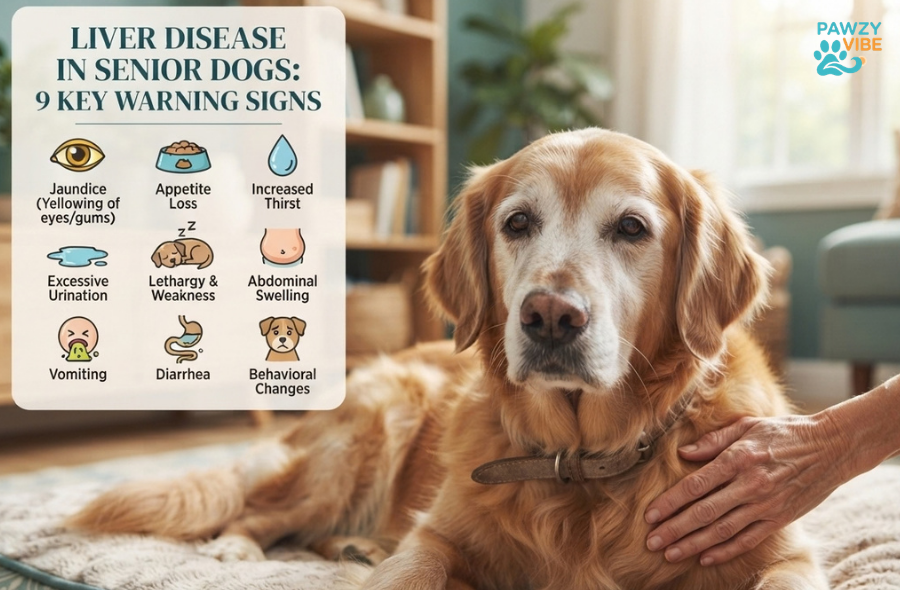
Symptoms often start subtly and build over time:
- Jaundice — a yellowish tinge to the eyes, gums, ears, or skin, caused by a buildup of bilirubin
- Loss of appetite and unexplained weight loss
- Lethargy or noticeably reduced energy
- Vomiting or diarrhea
- Increased thirst and urination
- Orange-tinted urine or pale, clay-colored stools
- Abdominal swelling, from fluid buildup
- Unusual bruising or bleeding, since the liver produces clotting factors
- Neurological signs in advanced cases — confusion, disorientation, or even seizures, a condition known as hepatic encephalopathy
💡 Vet Technician Note: Jaundice is one of the more obvious signs, but it usually shows up only once liver function is already significantly compromised. Don’t wait for yellow eyes before mentioning subtler symptoms like appetite changes to your vet.
Common Causes of Liver Disease in Senior Dogs
Several distinct issues can affect an aging dog’s liver:
- Chronic hepatitis — ongoing liver inflammation, sometimes with a genetic component in breeds like Cocker Spaniels, Doberman Pinschers, and Labrador Retrievers
- Cushing’s disease — excess cortisol commonly causes a specific pattern of liver enzyme elevation called steroid hepatopathy, one of the most frequent liver findings in senior dogs
- Liver tumors, including cancers that either start in the liver or spread there — see our guide on cancer in senior dogs for more on warning signs
- Toxin exposure or medication reactions
- Infections such as leptospirosis
- Gallbladder or bile duct issues
Because so many distinct underlying conditions can cause liver disease in senior dogs, effective treatment always depends on identifying the root cause first.
How Vets Diagnose Liver Disease
A liver workup typically includes:
- Bloodwork checking liver enzymes (like ALT and ALP) and bilirubin levels
- A bile acids test, which evaluates how well the liver is actually functioning rather than just showing inflammation
- Abdominal ultrasound, to look at liver size, structure, and check for masses
- A liver biopsy, the most definitive way to identify the exact cause and extent of damage
Since biopsies and certain imaging procedures often require sedation, our guide to anesthesia in senior dogs covers how this is approached safely for older patients — which matters even more here, since the liver itself is responsible for metabolizing many anesthetic drugs.
Treatment Options
Managing liver disease in senior dogs depends heavily on the underlying cause, but a comprehensive care plan commonly includes:
- Addressing the root condition — for example, managing Cushing’s disease if steroid hepatopathy is the cause
- Liver-support diets, often lower in copper and formulated to ease the liver’s workload
- Medications such as liver-protective supplements, prescribed under veterinary guidance
- Managing complications, like reducing abdominal fluid buildup or addressing neurological symptoms
Many dogs respond well once the underlying driver is identified and treated, thanks to the liver’s genuine capacity to heal.
A Real-Life Scenario
When 12-year-old Cocker Spaniel Buddy became increasingly lethargic and started refusing his breakfast, his owner Elena initially chalked it up to normal aging. A subtle yellow tint to his gums prompted a vet visit, and bloodwork revealed early liver disease — caught early enough that diet changes and medication brought his liver values back into a much healthier range within months.
Liver Disease Action Checklist
| If You Notice… | Do This |
|---|---|
| Yellowing of the eyes, gums, or skin | See a vet promptly — this points to significant liver involvement |
| Appetite loss or unexplained weight loss | Schedule bloodwork to check liver enzymes |
| Increased thirst and urination | Mention this alongside any other symptoms — it’s a common liver disease sign |
| Confusion or disorientation | Treat as urgent, especially alongside other liver symptoms |
| Known Cushing’s disease diagnosis | Ask your vet to monitor liver enzymes regularly |
| Considering surgery or a procedure | Discuss liver function testing before anesthesia |
Frequently Asked Questions
What are the first signs of liver disease in dogs? Early signs often include appetite loss, lethargy, and mild weight loss, with more obvious signs like jaundice and increased thirst appearing as the condition progresses.
Is jaundice always a sign of liver disease in dogs? Not always, but it’s a strong signal that something is affecting how the liver processes bilirubin, and it warrants prompt veterinary evaluation regardless of the exact cause.
Can liver disease in senior dogs be cured? It depends on the underlying cause. Many forms are manageable or even reversible if caught early, since the liver has a genuine ability to regenerate when the root problem is addressed.
Does Cushing’s disease cause liver problems in dogs? Yes, commonly. Excess cortisol from Cushing’s disease frequently causes elevated liver enzymes, a pattern known as steroid hepatopathy, which is one of the most frequent liver findings in senior dogs.
What should a senior dog with liver disease eat? Many vets recommend a liver-support diet, often lower in copper and easier on the liver’s workload, though the right approach depends on the specific diagnosis and should be guided by your vet.
Medical Disclaimer: This article is intended for informational purposes only and is not a substitute for professional veterinary diagnosis, advice, or treatment. If your dog shows signs of liver disease, please consult a licensed veterinarian promptly.
Amazon Affiliate Disclosure: PawzyVibe is a participant in the Amazon Services LLC Associates Program, an affiliate advertising program designed to provide a means for sites to earn advertising fees by advertising and linking to Amazon.com. As an Amazon Associate, we earn from qualifying purchases at no additional cost to you.