
Last updated: September 2026
Hearing the word “cancer” from your vet is one of the most frightening moments a dog owner can face. But cancer in senior dogs is far more common — and often more treatable — than most people realize, and knowing what to watch for can genuinely change the outcome.
This guide walks through the early warning signs, the cancers most likely to affect older dogs, how diagnosis actually works, and what treatment and support look like in real life.
How Common Is Cancer in Senior Dogs?
The numbers are sobering, but knowledge is genuinely protective here. According to AAHA, about 1 in 4 dogs will develop cancer in their lifetime, and nearly half of dogs over age 10 will be affected.
That statistic can feel overwhelming, but here’s the part that matters most: roughly half of all canine cancers are treatable when they’re caught early. Early detection of cancer in senior dogs is genuinely. the single biggest factor in outcome — which is exactly why knowing the warning signs matters so much.
10 Early Warning Signs of Cancer in Senior Dogs
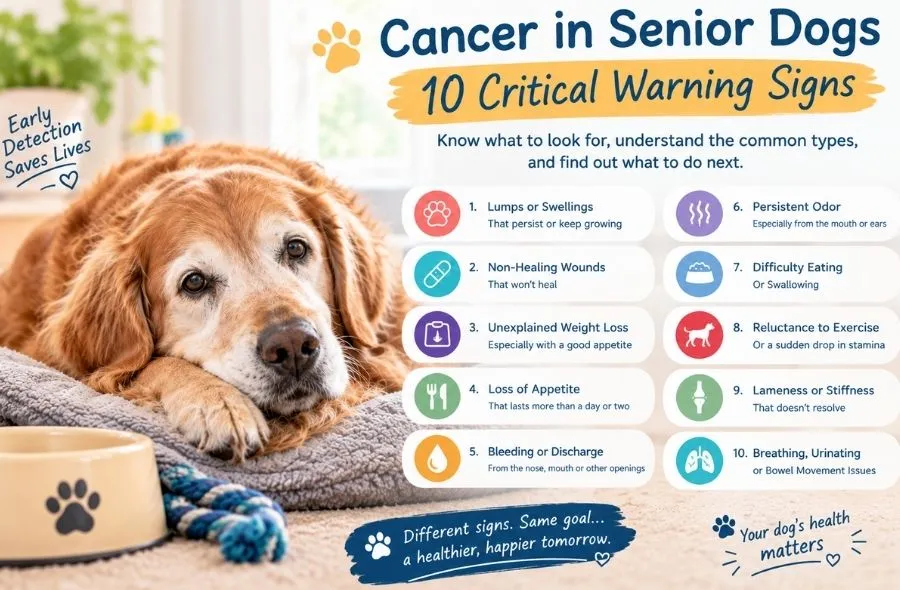
Veterinary oncologists point to a consistent set of red flags. None of these guarantee cancer on their own — several overlap with far more common, treatable conditions — but any of them deserve a prompt vet visit:
- A lump or swelling that persists or keeps growing — this is different from checking every new bump; see our guide on lumps and bumps on senior dogs for how to tell the two apart
- A sore or wound that won’t heal
- Unexplained weight loss, especially alongside a normal or increased appetite
- Loss of appetite that lasts more than a day or two
- Bleeding or discharge from the nose, mouth, or any other body opening
- A persistent unpleasant odor, especially from the mouth or ears
- Difficulty eating or swallowing
- Reluctance to exercise or a sudden drop in stamina
- Persistent lameness or stiffness that doesn’t resolve
- Difficulty breathing, urinating, or having a bowel movement
If several of these show up together, or any single one lasts longer than a few days, it’s worth a vet visit rather than a wait-and-see approach.
💡 Vet Technician Note: A lot of these signs — appetite changes, stiffness, weight shifts — also show up with signs of pain in senior dogs that have nothing to do with cancer. Don’t panic, but don’t dismiss anything that lingers either. A vet visit rules things in or out either way.
Common Types of Cancer in Senior Dogs
Not all canine cancers behave the same way. Here are the ones vets see most often in older dogs:
| Type | What It Looks Like | Commonly Affected |
|---|---|---|
| Lymphoma | Swollen lymph nodes, often under the jaw or behind the knees; can affect multiple organs | Any breed, middle-aged to senior dogs |
| Mast Cell Tumors | Skin lumps that can change size suddenly; may look alarmingly ordinary | Boxers, Bulldogs, Labradors |
| Hemangiosarcoma | Often silent until a tumor ruptures, causing sudden weakness or pale gums | Golden Retrievers, German Shepherds |
| Osteosarcoma (bone cancer) | Persistent lameness, swelling near a joint, often in a limb | Large and giant breeds |
| Mammary Tumors | Lumps along the mammary chain | Unspayed or late-spayed female dogs |
Hemangiosarcoma deserves special mention: it can grow quietly on the spleen or heart with almost no warning signs until it ruptures, which is one of the strongest arguments for routine senior wellness bloodwork rather than waiting for obvious symptoms.
How Vets Diagnose Cancer in Senior Dogs
A cancer workup typically involves several layers, since no single test tells the whole story:
- A full physical exam, including palpating lymph nodes and any visible lumps
- Bloodwork and urinalysis to check overall organ function and look for red flags
- Imaging — x-rays or ultrasound, and sometimes CT or MRI for more detail
- A biopsy or fine-needle aspirate — the only way to confirm a diagnosis and identify the exact cancer type
Because biopsies and many imaging procedures require your dog to stay completely still, sedation or general anesthesia is often part of the process. Our guide to anesthesia in senior dogs covers what to expect and how it’s made safer for older patients.
💡 Vet Technician Note: A biopsy result can feel like a long wait, but it’s worth it — treatment plans differ enormously by cancer type, and guessing based on appearance alone is never as reliable as lab confirmation.
Treatment Options: What Fighting Cancer Actually Looks Like
Treating cancer in senior dogs has come a long way, and it looks different than most people expect:
- Surgery is often the first line of defense for solid, localized tumors, and can be curative on its own in many cases
- Chemotherapy in dogs is generally much better tolerated than in humans — most dogs keep their fur and continue enjoying normal activities during treatment
- Radiation therapy is used for tumors that can’t be fully removed surgically, particularly in the head, neck, or near the spine
- Palliative and comfort care focuses on quality of life rather than cure, and is a completely valid choice, not a lesser one
Choosing between these options often comes down to the type and stage of cancer, your dog’s overall health, and your family’s own goals — there’s no single “right” answer that fits every dog.
A Real-Life Scenario
When 10-year-old Golden Retriever Milo started limping on one back leg with no obvious injury, his owner Jason assumed arthritis and started him on joint supplements. Three weeks later, x-rays revealed a bone tumor — an early diagnosis that gave Milo’s family time to weigh surgical and pain-management options together with their vet, rather than being caught off guard by a sudden fracture.
Supporting a Senior Dog Through Cancer Treatment
Whatever path you choose, day-to-day comfort matters enormously:
- Nutrition support — appetite often dips during treatment, and easily digestible options like air-dried dog food can help tempt a reluctant eater
- Weight monitoring — tracking changes closely ties directly into our guide on senior dog weight loss
- Pain management — staying ahead of discomfort, rather than reacting to it, makes a real difference in daily comfort
- Ongoing quality-of-life check-ins — our quality of life scale for senior dogs is a genuinely useful tool for tracking how your dog is doing throughout treatment, not just at the end
💡 Vet Technician Note: Choosing comfort-focused care over aggressive treatment is never “giving up.” For many senior dogs, especially those with other health conditions, a well-managed comfort care plan can offer more good days than an intensive treatment protocol would.
Cancer Warning Signs & Action Checklist
| If You Notice… | Do This |
|---|---|
| A lump that’s growing or changing | Schedule a vet visit for evaluation, possibly a biopsy |
| Unexplained weight loss or appetite loss | Book bloodwork and a physical exam |
| Persistent lameness or stiffness | Ask about imaging to rule out bone involvement |
| Sudden weakness or pale gums | Treat as an emergency — this can signal internal bleeding |
| A confirmed cancer diagnosis | Discuss surgery, chemo, radiation, and comfort care options together |
| Managing treatment day to day | Track appetite, weight, and comfort using a quality-of-life checklist |
Frequently Asked Questions
What are the first signs of cancer in senior dogs? Common early signs include a persistent lump, unexplained weight loss, appetite changes, lameness, and low energy. Many of these overlap with other conditions, so a vet visit is the only way to know for sure.
Is cancer in dogs treatable? Often, yes. Roughly half of all canine cancers are treatable, especially when caught early, and options range from surgery and chemotherapy to radiation and comfort-focused care.
What cancers are most common in senior dogs? Lymphoma, mast cell tumors, hemangiosarcoma, osteosarcoma, and mammary tumors are among the most frequently diagnosed cancers in older dogs.
How is cancer diagnosed in dogs? Vets typically combine a physical exam, bloodwork, imaging like x-rays or ultrasound, and a biopsy or needle aspirate, since biopsy is the only way to confirm the exact type of cancer.
Do dogs get sick from chemotherapy like people do? Generally not to the same degree. Most dogs tolerate chemotherapy well, keep their fur, and maintain a good quality of life throughout treatment, though side effects vary by individual and protocol.
Medical Disclaimer: This article is intended for informational purposes only and is not a substitute for professional veterinary diagnosis, advice, or treatment. If your dog shows any warning signs of cancer, please consult a licensed veterinarian promptly.
Amazon Affiliate Disclosure: PawzyVibe is a participant in the Amazon Services LLC Associates Program, an affiliate advertising program designed to provide a means for sites to earn advertising fees by advertising and linking to Amazon.com. As an Amazon Associate, we earn from qualifying purchases at no additional cost to you.