
Last updated: September 2026
There’s a moment most senior dog owners recognize. Your dog walks up to the couch, looks up at the cushion, and just… stands there. They used to leap up without thinking. Now they’re calculating — weighing the effort against the discomfort, sometimes deciding it’s not worth it.
That hesitation is worth paying attention to. A dog who stops jumping isn’t being lazy. They’re being honest about how their joints feel. And every time they do still make that jump — up to the bed, down from the car, onto the couch — they’re absorbing impact that compounds over months and years.
A ramp doesn’t fix aging. But it quietly removes one of the most common sources of daily joint strain — and a lot of senior dogs, once they get used to one, seem genuinely relieved to have it.
The problem is that “dog ramp” is one of those categories where the price range ($25 to $600) tells you almost nothing about quality, and the marketing descriptions all start to sound the same. Non-slip surface. Foldable design. Supports up to 150 lbs. We went through the options that actually show up in senior dog owner communities, filtered for what veterinary guidance says actually matters for aging joints, and narrowed it down to five that are worth your money.
What Makes a Ramp Actually Work for a Senior Dog
Before the product list, it’s worth spending a few minutes on what separates a ramp that helps from one that ends up in your closet because your dog won’t use it.
Slope angle matters more than ramp length
Here’s the calculation most buyers miss: a ramp’s usefulness for an arthritic dog isn’t about how long it is — it’s about the angle it creates at the height you’re using it.
A 36-inch ramp propped against a 24-inch bed creates a steep climb that a dog with hip stiffness will avoid. A 60-inch ramp at the same height creates a gentle incline that feels almost like flat ground. The general rule that veterinarians and mobility specialists suggest: aim for a ramp that’s at least twice as long as the height it needs to cover. For a 24-inch bed, that means 48 inches of ramp minimum. For a dog with significant arthritis or hip dysplasia, longer is genuinely better.
Surface grip is non-negotiable
Senior dogs lose traction in their paw pads as they age. The cushioned padding thins, the nails get longer, and surfaces that used to feel secure start to feel slippery. A dog who slips on a ramp even once will often refuse to use it again — the anxiety stays with them.
What works: heavy-duty carpet across the entire surface, grippy rubber tread, or high-traction fabric. What doesn’t: smooth plastic, painted wood, or those thin “non-slip coating” strips that wear off after a few weeks.
Side rails prevent the scariest moment
Even dogs who use a ramp confidently will occasionally step to the side — especially when they’re nervous, tired, or disoriented (which happens more often with cognitive changes in older dogs). A dog who steps off the side of a ramp mid-climb can fall hard. Side rails — even low ones, 2 to 4 inches — give dogs a tactile boundary that prevents this. It’s one of the most overlooked features in reviews, and one of the most important for senior dogs specifically.
Weight capacity is about stability, not just safety
Every ramp has a weight limit. What buyers often miss is that the weight limit also affects how much the ramp flexes under your dog’s weight. A 50-pound Lab using a ramp rated for 60 pounds will feel the ramp shift and sway with each step. The same dog on a ramp rated for 150 pounds feels a stable, solid surface. Senior dogs, who are already less confident on their feet, need that stability to trust the ramp. Buy with headroom.
For car ramps — length is everything
Getting a senior dog in and out of a car or SUV involves height drops of 24 to 36 inches or more. The physics are unforgiving: at those heights, even a 48-inch ramp creates a steeper angle than ideal. For vehicles, look for ramps that extend to at least 60 to 72 inches — and for large breeds or dogs with significant mobility issues, longer is better. Telescoping options that can extend to different lengths depending on your vehicle give the most flexibility.
Quick Comparison: The 5 Best Dog Ramps for Senior Dogs
| Ramp | Best For | Length | Weight Limit | Price Range |
| PetSafe Happy Ride Telescoping | Cars, trucks, SUVs | Up to 87″ | 300 lbs | Premium |
| KUVETO Wooden Ramp | Indoor furniture, beds | 74″ | Not specified | Mid-range |
| Veehoo Adjustable Ramp | Versatility, multiple heights | Adjustable | 150 lbs | Mid-range |
| REONEY 2026 Upgraded | Value, ease of setup | Adjustable | 200 lbs | Budget |
| PetSTEP Folding Ramp | Heavy breeds, maximum stability | 62″ | 500 lbs | Premium |
Prices on Amazon shift frequently — check the current listing before buying.
The 5 Best Dog Ramps for Senior Dogs, Reviewed
PetSafe Happy Ride Telescoping Ramp — Best for Cars, Trucks, and SUVs
If your senior dog rides with you regularly, this is the ramp to know about. PetSafe built the Happy Ride specifically for vehicle access — it telescopes from a compact storage size to full length, comes in Regular (6 feet) and Extra-Large (7.25 feet) versions, and has been tested with dogs over 100 pounds without flexing or wobbling.
Why it works for seniors: The length options matter here. At 7.25 feet, the Extra-Large version creates a genuinely gentle incline even for tall vehicles — the kind of slope that a dog with hip arthritis can navigate without bracing themselves against the angle. The non-slip tread spans the full surface, not just a strip down the middle.
Key features:
- Telescopes to 72″ (Regular) or 87″ (Extra-Large)
- Supports up to 300 lbs
- Full-surface non-slip tread
- Folds down to roughly half its length for storage
Best for: Senior dogs who ride in cars, trucks, or SUVs regularly — especially larger breeds or dogs with hip or back issues where vehicle access has become difficult.
2. KUVETO Wooden Ramp — Best for Indoor Furniture and High Beds
Wood ramps have a particular advantage that plastic and aluminum alternatives don’t: they feel solid underfoot in a way that builds confidence in anxious or hesitant dogs. The KUVETO is a 74-inch wooden ramp with a 20-degree slope, removable side rails, and wheels at the base that let you roll it from room to room without picking it up — a small detail that matters when you’re repositioning it daily.
Why it works for seniors: The 20-degree slope is gentle enough for dogs with significant stiffness, and at 74 inches, it reaches most standard bed heights (around 24 to 28 inches) with a gradual incline rather than a steep climb. The side rails are a meaningful addition — they’re not decorative; they give unsteady dogs a boundary to orient against.
Key features:
- 74 inches long with 20° gentle slope
- Removable side rails
- Non-slip surface on full ramp length
- Wheels at base for easy repositioning
- Top platform provides a resting point before the dog steps onto the bed
Best for: Senior dogs who need help accessing beds or furniture, and owners who want a stable, confidence-inspiring surface that a hesitant dog is more likely to trust.
3. Veehoo Height-Adjustable Ramp — Best for Versatility Across Multiple Heights
Not every senior dog owner has one ramp destination. Some need access to the bed, the couch, and occasionally the car. The Veehoo adjusts across six height settings from 12 to 24 inches and at 17 inches wide gives most medium and large dogs enough room to walk without feeling crowded on the surface.
Why it works for seniors: The adjustability is the point here. As your dog’s mobility changes over time — or as you move the ramp to different furniture — you can adapt the angle rather than buying a new ramp. The 150-pound weight limit and extra-wide surface also mean it works for larger breeds who can find narrower ramps anxiety-inducing.
Key features:
- 6 adjustable height settings (12″ to 24″)
- 17″ wide walking surface
- Supports up to 150 lbs
- Non-slip pad on walking surface
Folds flat for storage
Best for: Owners who want one ramp that adapts to different furniture heights, or who expect their dog’s needs to change as mobility decreases over time.
4. REONEY 2026 Upgraded Dog Ramp — Best Value with Genuine Features
Budget dog ramps often cut corners on the things that matter most for senior dogs — surface grip, structural stability, and weight capacity. The REONEY holds up better than its price suggests on all three. Seven adjustable height settings from 11 to 26.6 inches cover a wide range of furniture heights, and the solid wood construction means less flex than comparably priced plastic alternatives.
Why it works for seniors: The 200-pound weight capacity on a budget ramp is meaningful — most options at this price point cap at 60 to 80 pounds, which means they flex noticeably under larger dogs. The REONEY also arrives 98% assembled, which matters for owners who don’t want to spend an hour with instructions before their dog can use it.
Key features:
- 7 adjustable heights (11″ to 26.6″)
- Solid wood construction
- Supports up to 200 lbs
- High-traction surface
Ships 98% assembled
Best for: Owners who want genuine quality features without premium pricing, particularly for medium to large dogs with mild to moderate mobility issues.
5.PetSTEP Folding Ramp — Best for Heavy Breeds and Maximum Stability
The PetSTEP is in its own category when it comes to weight capacity: 500 pounds. That number isn’t just for giant breeds (though it works for those too) — it means that even a 60-pound dog experiences an exceptionally stable, zero-flex surface that doesn’t shift or wobble at all during use. For senior dogs who have already become reluctant or anxious around ramps, that stability is often what convinces them to try.
Why it works for seniors: The plastic and fiberglass construction is lighter than it sounds and easier to clean than carpet-covered options — relevant for senior dogs who sometimes have accidents. The non-slip rubber grips cover the full walking surface and hold up over time without the wear that fabric surfaces show.
Key features:
- 500-pound weight capacity
- Plastic and fiberglass construction (lightweight, easy to clean)
- Non-slip rubber grips on full surface
Folds in half for storage
Best for: Large and giant breed senior dogs, or any dog who needs maximum stability to feel confident on a ramp — especially dogs who have had negative experiences with wobbly or flexible alternatives.
How to Choose the Right Ramp for Your Dog
For beds and indoor furniture: Focus on slope angle first. Measure the height of your bed or couch, then look for a ramp at least twice that length. If your dog weighs over 60 pounds or has significant arthritis, a wooden ramp with side rails will give them the most confidence.
For cars and SUVs: Length is the priority. Vehicle heights vary enormously — a sedan and a pickup truck are completely different problems. A telescoping ramp that adjusts to your vehicle is more useful than a fixed-length option that might not create a gentle enough slope.
For anxious or reluctant dogs: Prioritize stability (high weight capacity relative to your dog’s size) and surface texture (carpet or rubber, not smooth plastic). Consider a ramp with side rails. And give the introduction time — most senior dogs need a week or two of gradual introduction before they use a ramp with confidence.
Helping Your Dog Use the Ramp: A Few Honest Notes
A ramp is only useful if your dog actually uses it. Some senior dogs take to ramps immediately; others are suspicious of anything new placed in their space.
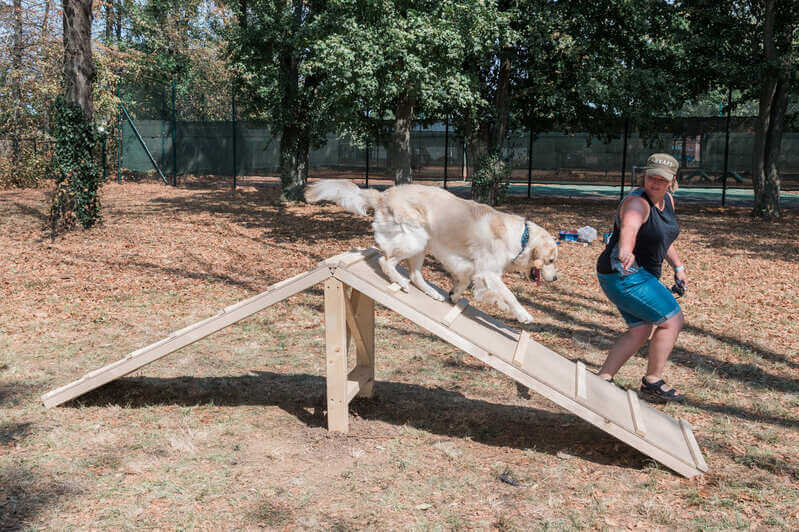
If your dog is reluctant, the most effective approach is patience over persistence. Start by letting the ramp simply exist in the room without asking your dog to do anything with it. After a few days, place treats at the bottom and just let them investigate. Gradually move the treats up the surface over several sessions — don’t try to coax them all the way up on the first try. Most dogs who’ve had bad joint experiences are genuinely afraid, not stubborn, and that fear responds to time and positive association rather than encouragement or pressure.
One practical note: some dogs will use a ramp going up much sooner than they’ll use it coming down. Going down can feel less stable and more disorienting. You may need to guide your dog down the ramp with your hand on their side for the first several sessions, not to steer them but to give them the physical reassurance that you’re there.
Frequently Asked Questions
At what age should I get a ramp for my senior dog? There’s no single right age — it depends more on your dog’s size, breed, and current mobility than their age in years. Large and giant breeds generally benefit from ramps earlier (sometimes as young as six or seven) because of their size and predisposition to joint issues. For smaller breeds, eight to ten years is often when ramps start to make a meaningful difference. If you notice your dog hesitating before jumps they used to make confidently, that’s worth acting on sooner rather than later.
Can a ramp help a dog who already has arthritis? Yes, and often significantly. Removing the impact of repeated jumping doesn’t reverse arthritis, but it eliminates one of the most consistent sources of daily joint stress. Many owners report that their dog moves more freely in general after a few weeks of using a ramp — likely because they’re no longer compensating for the soreness that daily jumping was causing.
My dog refuses to use the ramp. What should I do? Start slower. Most ramp refusal comes from anxiety, not stubbornness — and anxiety responds to positive association over time, not pressure in the moment. Place the ramp in the room without asking your dog to use it for several days. Introduce treats on the surface. Work up the incline gradually over multiple sessions. The majority of reluctant dogs will come around within one to two weeks if the introduction is patient and low-pressure.
Are ramps better than stairs for senior dogs? For most senior dogs, ramps are preferable to stairs because they eliminate the repeated up-and-down joint flexion that stair climbing requires. A ramp is closer to walking on flat ground — the movement pattern is more natural and puts less stress on hips, knees, and elbows. That said, some dogs adapt more easily to stairs than ramps, particularly smaller breeds. If your dog takes to stairs readily and uses them confidently, that’s fine — the goal is reducing jump impact, and stairs accomplish that even if the mechanics are slightly different.
Final Thoughts
Buying a ramp for your senior dog is one of those purchases that can quietly change the texture of their daily life. It’s not dramatic — they won’t suddenly seem ten years younger. But the absence of daily joint impact adds up. Easier mornings. Less reluctance to settle in their favorite spot. A little more confidence in how they move around the house.
The right ramp depends on your dog’s size, your furniture heights, and how willing your dog is to try something new. If you have a large or arthritic dog and a high bed, start with the KUVETO or PetSafe Happy Ride. If you’re working with a budget, the REONEY punches above its price. If stability is the priority above everything else, the PetSTEP’s weight capacity makes it the most reassuring option for anxious dogs.
Whatever you choose, give the introduction the time it needs. Most dogs get there.
The information in this article is for general educational purposes and is not a substitute for professional veterinary advice. If your dog has significant mobility challenges, joint disease, or has recently had surgery, please consult your veterinarian before introducing a ramp. See our Medical Disclaimer for more information.
Affiliate Disclosure: PawzyVibe participates in the Amazon Services LLC Associates Program. If you purchase through the links on this page, we may earn a small commission at no extra cost to you. We only recommend products we’ve researched and genuinely believe will help senior dogs.