
Last updated: September 2026
Your dog has been drinking constantly, seems hungrier than usual, and honestly, his belly looks a little rounder than it used to. None of it seems dramatic on its own. Together, though, it’s a pattern worth paying attention to.
Cushing’s disease in senior dogs, also called hyperadrenocorticism, is one of the most commonly overlooked hormonal conditions in aging dogs, largely because its early signs look so much like ordinary aging. The good news is that it’s genuinely manageable once properly diagnosed.
This guide walks through the real signs of Cushing’s disease in senior dogs, how vets confirm it, and the proven treatment and monitoring approach that helps most dogs live comfortable, stable lives.
Why Cushing’s Disease Develops in Senior Dogs
Cushing’s disease happens when a dog’s body produces too much cortisol, a hormone made by the adrenal glands that helps regulate stress, metabolism, and immune function. In small, controlled amounts, cortisol is essential. In excess, it quietly damages nearly every system it touches.
Most cases, roughly 85-90%, are caused by a small tumor on the pituitary gland at the base of the brain, which sends signals telling the adrenal glands to overproduce cortisol. A smaller number of cases involve a tumor directly on the adrenal gland itself.
A few things make Cushing’s disease in senior dogs more likely:
- Age, since it overwhelmingly affects dogs over 7-8 years old, regardless of breed
- Breed predisposition, with Poodles, Dachshunds, Boston Terriers, Boxers, and Yorkshire Terriers showing notably higher documented rates
- Long-term steroid medication, since prolonged use of drugs like prednisone can cause a medication-induced form of the condition
- Being small-breed, since small dogs are affected considerably more often than large breeds, though any dog can develop it
None of this means Cushing’s disease is inevitable. It means the early signs deserve real attention rather than being written off as simply getting older.
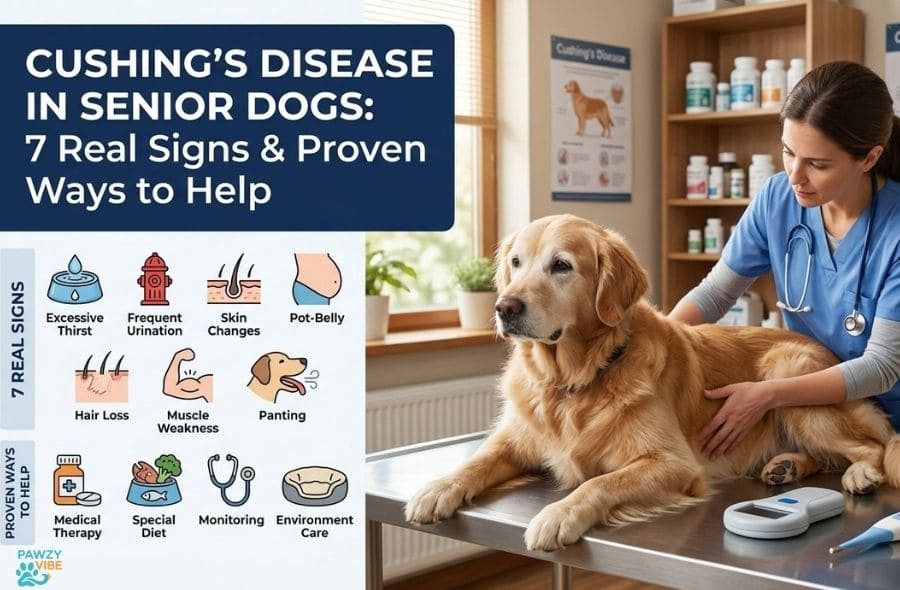
7 Real Signs of Cushing’s Disease in Senior Dogs
1. Drinking Noticeably More Water
This is almost always one of the first things owners notice, occurring in roughly 80-90% of diagnosed dogs, and it’s easy to initially blame on warm weather or an active day.
2. Increased Urination or Accidents
More water in naturally means more water out, sometimes showing up as accidents in a dog who’s normally reliable, a change that can look similar to the incontinence some senior dogs experience for entirely different reasons.
3. A Pot-Bellied Appearance
Fat redistribution and weakening abdominal muscles create a characteristic rounded, swollen-looking belly, one of the most recognizable visual signs of the condition.
4. Increased Appetite
Dogs with Cushing’s disease often seem unusually, sometimes insatiably, hungry, begging for food more persistently than they used to, even right after a full meal.
5. Thinning Coat or Hair Loss
A noticeably thinning coat, bald patches (especially along the flanks and tail), and thin, fragile-feeling skin are common as excess cortisol affects normal skin and hair cycling.
6. Muscle Weakness or Loss
Cortisol breaks down muscle tissue over time, and dogs often struggle more with stairs, jumping, or rising, changes that can worsen the symptoms of arthritis in dogs already managing joint pain.
7. Excessive Panting or Restlessness
Panting even while resting in a cool room, along with nighttime restlessness that can resemble the pattern described in our guide to sundowning in senior dogs, rounds out the most commonly reported signs.
💡 Vet Technician Note: No single sign here confirms Cushing’s disease on its own, and several overlap with other senior dog conditions. It’s the combination, especially thirst, hunger, and a changing body shape together, that’s worth bringing up at your next vet visit rather than assuming it’s just age.
A Familiar Story
Diane noticed her 10-year-old Dachshund, Otis, had started begging for food constantly and developed what she jokingly called his “beer belly” over a few months. Her vet noticed the pattern immediately during a routine exam and recommended specific hormone testing.
The diagnosis came back as pituitary-dependent Cushing’s disease. With daily medication and regular monitoring, Otis’s thirst and appetite normalized within a few weeks, and his energy has stayed steady for over a year since.
How Vets Actually Diagnose Cushing’s Disease in Dogs
You genuinely cannot diagnose Cushing’s disease in senior dogs from home, even when the pattern seems textbook. Confirming it requires specific, layered testing.
Routine bloodwork and urinalysis come first, often revealing supporting clues like elevated liver enzymes, high cholesterol, and dilute urine that point toward the condition, even though they don’t confirm it alone.
Specialized hormone testing, such as a low-dose dexamethasone suppression test or ACTH stimulation test, measures how a dog’s cortisol levels respond to specific triggers, which is what actually confirms the diagnosis.
Imaging, like an abdominal ultrasound, may follow to check the adrenal glands directly and help determine whether the cause is pituitary or adrenal in origin.
According to the American Kennel Club, Cushing’s disease requires consistent monitoring and ongoing treatment once diagnosed, and while that can be a genuine commitment, most dogs respond well and maintain a good quality of life.
💡 Vet Technician Note: Diagnosing Cushing’s disease often takes more than one visit and more than one type of test. Don’t be discouraged if your vet wants to retest or run a second type of hormone test. The complexity is normal, not a sign something’s being missed.
Proven Ways to Help a Dog With Cushing’s Disease
There’s no outright cure for most cases of Cushing’s disease in senior dogs, but with consistent treatment, most dogs manage very well long-term.
Daily Medication Is the Foundation
Medications like trilostane or mitotane work by reducing cortisol production, and most dogs need this daily, lifelong, with dosing adjusted based on regular follow-up testing.
Regular Monitoring Tests Matter
Periodic ACTH stimulation tests help your vet fine-tune medication dosing over time, since too little cortisol suppression won’t control symptoms, while too much can cause its own problems.
Watching for Complications
Left unmanaged, Cushing’s disease can directly contribute to diabetes and congestive heart failure, so staying consistent with treatment isn’t just about comfort, it genuinely protects against more serious downstream conditions.
Supporting Weight and Muscle Health
Since muscle wasting is common, gentle, consistent activity (as your vet approves) helps preserve strength, and monitoring body condition alongside the broader picture in unexplained weight and body changes helps track whether treatment is working.
Surgery in Select Cases
For dogs with an adrenal tumor rather than a pituitary-based cause, surgical removal is sometimes an option, though this depends heavily on the dog’s overall health and the specifics of the tumor.
💡 Vet Technician Note: Never adjust or stop Cushing’s medication on your own, even if your dog seems to be doing better. Cortisol levels that drop too far, too fast can cause a dangerous crisis, and dosing should only be changed under your vet’s direct guidance.
When to See a Vet Right Away
Some symptoms warrant prompt veterinary attention rather than a wait-and-see approach:
- Sudden lethargy, vomiting, or loss of appetite in a diagnosed dog
- Signs of a possible Addisonian crisis (the opposite extreme) if medication dosing is off
- A rapidly growing belly or sudden abdominal discomfort
- New neurological signs like circling or disorientation
- Any combination of the 7 signs above appearing together, suddenly
Per PetMD, while Cushing’s disease is rarely a same-day emergency itself, untreated cases can progressively affect multiple organ systems, which is exactly why persistent thirst and appetite changes shouldn’t be dismissed indefinitely.
Quick Reference: Managing Cushing’s Disease in Senior Dogs
| Situation | What Helps |
|---|---|
| New persistent thirst, hunger, or pot belly | Schedule a vet visit for hormone testing |
| Diagnosed with Cushing’s disease | Start daily medication exactly as prescribed |
| Managing long-term | Regular ACTH stimulation tests to fine-tune dosing |
| Also managing arthritis | Watch for worsening mobility from muscle loss |
| On long-term steroids for another condition | Ask your vet whether Cushing’s risk applies to your dog |
| Sudden lethargy or vomiting on medication | Contact your vet promptly, don’t wait it out |
Frequently Asked Questions
Can Cushing’s disease in senior dogs be cured? Most cases aren’t curable, but they’re very manageable with daily medication and monitoring. Dogs with an isolated adrenal tumor may have a chance at a cure through surgery, though this isn’t an option for every dog.
Is Cushing’s disease painful for dogs? Cushing’s disease itself isn’t typically described as painful, but it can worsen the pain of other conditions like arthritis through muscle loss, and untreated cases can lead to genuinely serious complications over time.
How long can a senior dog live with Cushing’s disease? Many dogs live comfortably for years with consistent treatment and monitoring. Life expectancy depends heavily on how early it’s caught, the specific cause, and how well a dog responds to medication.
What happens if Cushing’s disease in dogs goes untreated? Untreated Cushing’s disease can progressively lead to diabetes, congestive heart failure, recurrent infections, and significant muscle wasting, all of which meaningfully reduce quality of life over time.
Can diet help manage Cushing’s disease in dogs? Diet alone can’t treat the underlying hormone imbalance, but a balanced, appropriate-calorie diet supports overall health alongside medication, especially since maintaining muscle mass and a healthy weight matters more once Cushing’s disease is part of the picture.
This article is for general informational purposes and is not a substitute for professional veterinary advice. If your senior dog shows increased thirst, appetite changes, or a changing body shape, please consult your veterinarian promptly. See our Medical Disclaimer for more information.
PawzyVibe participates in the Amazon Services LLC Associates Program. If you purchase through links on this page, we may earn a small commission at no extra cost to you. We only recommend products we genuinely believe help senior dogs.