
Last updated: September 2026
Your dog has been drinking constantly lately, and somehow still seems hungrier than ever, even though he’s actually losing weight. It’s confusing, honestly. More food, less body.
That specific combination, increased thirst, increased appetite, and unexplained weight loss, is one of the clearest early patterns of diabetes in senior dogs, and it’s genuinely one of the most manageable chronic conditions once properly diagnosed.
This guide walks through the real signs of diabetes in senior dogs, how vets confirm it, and the proven insulin, diet, and monitoring routine that lets most diabetic dogs live full, comfortable lives.
Why Diabetes Becomes More Common as Dogs Age
Diabetes mellitus happens when a dog’s pancreas can’t produce enough insulin, the hormone responsible for moving glucose out of the bloodstream and into cells for energy. Without enough insulin, blood sugar climbs while the body’s cells are effectively starving.
Peak diagnosis lands between 7 and 10 years old, squarely in the senior years, though the exact reasons why aging increases risk aren’t fully understood. A combination of factors likely contributes.
A few things make diabetes in senior dogs more likely:
- Being overweight, since excess body fat is one of the most well-documented risk factors for insulin resistance
- Chronic or repeated pancreatitis, which can progressively damage the insulin-producing cells in the pancreas over time
- Being female and unspayed, since hormonal fluctuations during heat cycles can meaningfully affect insulin sensitivity
- Breed predisposition, with Miniature Schnauzers, Dachshunds, Poodles, and Samoyeds showing notably higher documented rates
- Long-term steroid use, since certain medications can interfere with normal insulin function over time
None of this means diabetes is inevitable. It means it’s common enough that recognizing the early pattern matters, especially since untreated diabetes can progress toward a genuine emergency.
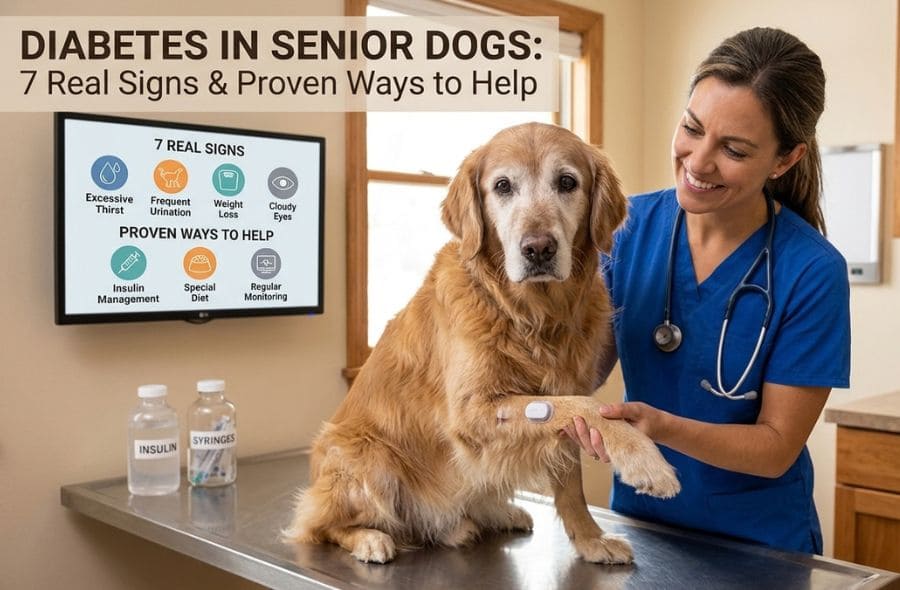
7 Real Signs of Diabetes in Senior Dogs
1. Drinking Noticeably More Water
This is almost always the first thing owners notice. High blood sugar pulls water out of tissues and into urine, leaving a dog persistently thirsty no matter how much they drink.
2. Increased Urination
More water in means more water out, and that often shows up as more frequent trips outside or occasional accidents in a dog who’s normally reliable, a change that can look similar to the incontinence some senior dogs experience for unrelated reasons.
3. Increased Appetite Paired With Weight Loss
Since the body can’t actually use the glucose in the bloodstream for energy, it starts breaking down fat and muscle instead, even as the dog eats more, contributing to the broader picture covered in our guide to unexplained weight loss in senior dogs.
4. Cloudy Eyes or Vision Changes
Diabetic cataracts are one of the most common complications, developing sometimes within just months of diagnosis, and can cause a noticeably cloudy or hazy appearance to the eyes.
5. Lethargy or Reduced Energy
Cells that can’t access glucose for energy leave a dog feeling persistently tired, even after adequate rest, regardless of how much they’re eating.
6. A Dull, Dry, or Thinning Coat
Metabolic changes from unmanaged blood sugar often show up in coat quality first, leaving fur looking noticeably less shiny or healthy than it used to.
7. Recurring Urinary Tract Infections
Sugar in the urine creates a friendlier environment for bacteria, so dogs with undiagnosed diabetes sometimes develop repeated UTIs before the underlying cause is identified.
💡 Vet Technician Note: No single sign here confirms diabetes on its own. It’s the combination, especially increased thirst paired with weight loss despite a bigger appetite, that’s worth mentioning to your vet rather than waiting to see if it resolves on its own.
A Familiar Story
Karen noticed her 9-year-old Miniature Schnauzer, Pepper, had started draining her water bowl twice as fast and somehow losing weight despite begging for food constantly. She assumed it was just an odd phase until routine bloodwork at her annual visit showed significantly elevated blood glucose.
With daily insulin injections and a consistent feeding schedule, Pepper stabilized within a few weeks and has been doing well for over a year now, back to her normal energetic self.
How Vets Actually Diagnose Diabetes in Dogs
You cannot diagnose diabetes in senior dogs from home, even when the thirst and appetite changes seem obvious. A proper diagnosis requires specific testing.
Blood glucose testing is the starting point, checking for persistently elevated blood sugar levels consistent with diabetes rather than a temporary stress-related spike.
Fructosamine testing measures average blood sugar over the past two to three weeks, helping rule out a one-time stress spike and confirm a genuine, ongoing pattern.
Urinalysis checks for glucose and ketones in the urine, both strong indicators of diabetes, and also screens for the urinary tract infections diabetic dogs are prone to.
According to the American Kennel Club, the sooner diabetes in dogs is diagnosed and treatment begins, the better a dog’s chances of maintaining a normal, comfortable life, which is exactly why persistent thirst shouldn’t be brushed off as a phase.
💡 Vet Technician Note: If your dog is diagnosed with diabetes, your vet may also test for underlying conditions like pancreatitis or Cushing’s disease, since these can complicate treatment. Don’t be surprised if the initial workup is more thorough than you expected.
Proven Ways to Help a Dog With Diabetes
There’s no cure for diabetes in senior dogs, but with consistent management, most diabetic dogs live long, comfortable, largely normal lives.
Insulin Therapy Is the Foundation
Nearly all diabetic dogs need daily insulin injections, typically twice a day, timed with meals. It sounds intimidating at first, but most owners find the actual injections quick and far less stressful than expected once they get the hang of it.
Consistency Matters More Than Perfection
Feeding the same amount, at the same times, every day, helps insulin work predictably. Sudden diet changes or skipped meals can cause dangerous blood sugar swings in either direction.
A Consistent, High-Fiber Diet
Diets with steady, complex carbohydrates and consistent fiber content help prevent the blood sugar spikes that simple carbohydrates cause. If you’re exploring diet options generally, our guide to air-dried dog food for senior dogs covers what to look for in less processed formulas, though your vet may recommend a specific therapeutic diet formulated around diabetes management.
Regular Exercise on a Predictable Schedule
Consistent daily activity helps regulate blood sugar and insulin sensitivity, but exercise timing should stay predictable too, since sudden bursts of activity can affect blood sugar unpredictably in a newly diagnosed dog.
Watching for Interactions With Other Conditions
Diabetes often complicates management of other senior conditions. If your dog also has kidney disease, for example, both conditions affect thirst and urination in overlapping ways, making close vet coordination essential rather than optional.
💡 Vet Technician Note: Learn the signs of low blood sugar (hypoglycemia) immediately after diagnosis, including wobbliness, weakness, or a glassy stare. It’s a genuine emergency that can happen with insulin therapy, and knowing to offer a small amount of corn syrup on the gums while heading to the vet can be lifesaving.
When to See a Vet Right Away
Some symptoms warrant same-day or emergency veterinary attention rather than a wait-and-see approach:
- Vomiting, diarrhea, or noticeable lethargy in a diagnosed diabetic dog
- Breath with an unusual, sweet or fruity smell
- Sudden weakness, wobbliness, or collapse
- Complete loss of appetite lasting more than a day
- Any combination of the 7 signs above appearing together, suddenly
Per PetMD, undiagnosed or poorly managed diabetes can progress to diabetic ketoacidosis, a genuine medical emergency, which is exactly why persistent symptoms should never be managed by guessing at home.
Quick Reference: Managing Diabetes in Senior Dogs
| Situation | What Helps |
|---|---|
| New persistent thirst and weight loss | Schedule a vet visit for bloodwork; don’t wait it out |
| Newly diagnosed with diabetes | Learn proper insulin injection technique from your vet or vet tech |
| Managing daily routine | Feed and inject insulin at the same times every single day |
| Dog also has kidney disease | Ensure your vet coordinates both conditions together |
| Signs of low blood sugar | Offer corn syrup on the gums and get to a vet immediately |
| Long-term management | Regular fructosamine testing to track control over time |
Frequently Asked Questions
Can diabetes in senior dogs be cured? No, diabetes mellitus in dogs isn’t curable, but it’s very manageable. Most diabetic dogs live full, comfortable lives for years with consistent insulin therapy, diet, and monitoring.
Is diabetes in dogs the same as diabetes in humans? It’s similar in that both involve insulin and blood sugar regulation, but canine diabetes is almost always the insulin-dependent type, meaning nearly all diabetic dogs need daily insulin injections rather than oral medication alone.
How much does it cost to manage a diabetic senior dog? Costs vary by region and insulin type, but ongoing expenses typically include insulin, syringes, regular bloodwork, and prescription diet if recommended. Many owners find costs more manageable than initially feared once the dog is stabilized.
Can a diabetic dog still live a normal, active life? Yes, absolutely. Most well-managed diabetic dogs continue enjoying walks, play, and daily routines much like before, with the main adjustment being consistent timing around meals and insulin.
What happens if diabetes in a senior dog goes untreated? Untreated diabetes can progress to diabetic ketoacidosis, a serious and potentially fatal complication, along with a higher risk of diabetic cataracts and recurring infections. Early diagnosis and consistent treatment prevent most of these complications.
This article is for general informational purposes and is not a substitute for professional veterinary advice. If your senior dog shows increased thirst, appetite changes, or unexplained weight loss, please consult your veterinarian promptly. See our Medical Disclaimer for more information.
PawzyVibe participates in the Amazon Services LLC Associates Program. If you purchase through links on this page, we may earn a small commission at no extra cost to you. We only recommend products we genuinely believe help senior dogs.