
Last updated: September 2026
Your dog has had a bit of a cough lately. Nothing dramatic, just a dry little hack every so often, usually after he lies down or gets excited at the door. You’ve probably chalked it up to a tickle in his throat, or maybe just getting older.
Here’s the honest truth: that small, easy-to-dismiss cough is one of the most common early signs of heart disease in senior dogs, and it’s genuinely worth paying attention to. One study found that 43% of older dogs brought in for a persistent cough were later confirmed to have early-stage congestive heart failure.
This guide walks through the real signs of heart disease in senior dogs, how vets actually diagnose it, and the proven ways diet, medication, and daily care can meaningfully extend a dog’s comfort and quality of life.
Why Heart Disease Becomes So Common in Senior Dogs
The canine heart has four chambers and four valves that keep blood flowing in one direction. Over years of steady use, especially in smaller and toy breeds, those valves can gradually weaken and stop closing tightly.
The most common culprit is mitral valve disease, where the valve between the left atrium and left ventricle starts to leak. Blood that should move forward slips backward instead, and the heart has to work harder to compensate.
A few things make heart disease in senior dogs more likely:
- Age-related valve degeneration, which is by far the most common cause and simply reflects years of normal wear
- Breed predisposition, with small breeds like Cavalier King Charles Spaniels, Chihuahuas, and Dachshunds showing notably higher rates of valve disease
- Dilated cardiomyopathy, a different condition where the heart muscle itself weakens, seen more often in larger breeds like Doberman Pinschers
- Long-term untreated dental disease, since bacteria from the mouth can enter the bloodstream and contribute to heart valve inflammation over time
- Diet-related factors, including a documented link between certain grain-free diets and dilated cardiomyopathy in some dogs
None of this means heart disease is inevitable. It means it’s common enough that every senior dog owner benefits from recognizing the early signs rather than waiting for something dramatic.
7 Real Signs of Heart Disease in Senior Dogs
1. A Persistent, Dry Cough
This is usually the very first thing owners notice, often worse at night, after lying down, or during moments of excitement, as fluid begins to put gentle pressure on the airways.
2. Tiring Faster on Walks
A dog who used to keep pace easily now lags behind, stops to rest, or seems noticeably winded after activity that never used to bother them.
3. Increased Resting Respiratory Rate
Counting breaths while your dog is calmly asleep is one of the simplest home checks available, and a consistently elevated rate can be an early warning sign before other symptoms appear.
4. Restlessness or Pacing Before Bed
Dogs with early heart changes sometimes struggle to get comfortable at night, pacing or repositioning repeatedly, a pattern that can look similar to the nighttime restlessness covered in our guide to sundowning in senior dogs, though the underlying cause is entirely different.
5. A Swollen or Distended Belly
Fluid buildup in the abdomen, called ascites, can cause a noticeably rounder or firmer belly, especially in more advanced right-sided heart disease.
6. Pale or Bluish Gums
Healthy gums should be a bubblegum pink. Gums that look pale, gray, or slightly blue can signal that oxygen isn’t circulating efficiently, and this warrants prompt veterinary attention.
7. Unexplained Weight or Muscle Loss
As the heart struggles to keep up with the body’s demands, dogs often lose muscle mass and body condition, joining the list of possible explanations behind unexplained weight loss in senior dogs.
💡 Vet Technician Note: A cough alone doesn’t confirm heart disease, and plenty of coughs come from a collapsing trachea, kennel cough, or simple allergies instead. But a persistent cough in a senior dog, especially one that’s dry, happens at night, or comes with any of the other signs here, is always worth a vet visit rather than a “let’s wait and see.”
A Familiar Story
Margaret noticed her 12-year-old Cavalier King Charles Spaniel, Biscuit, had developed a small cough that seemed to show up mostly at night. She assumed it was just a minor throat thing until her vet heard a heart murmur during a routine exam and recommended an echocardiogram.
The scan confirmed early mitral valve disease. With daily medication and a lower-sodium diet, Biscuit is still happily going on his regular walks over a year later, just at a slightly gentler pace.
How Vets Actually Diagnose Heart Disease in Dogs
You cannot diagnose heart disease in senior dogs from home, no matter how textbook the cough seems. A proper workup involves a few specific steps.
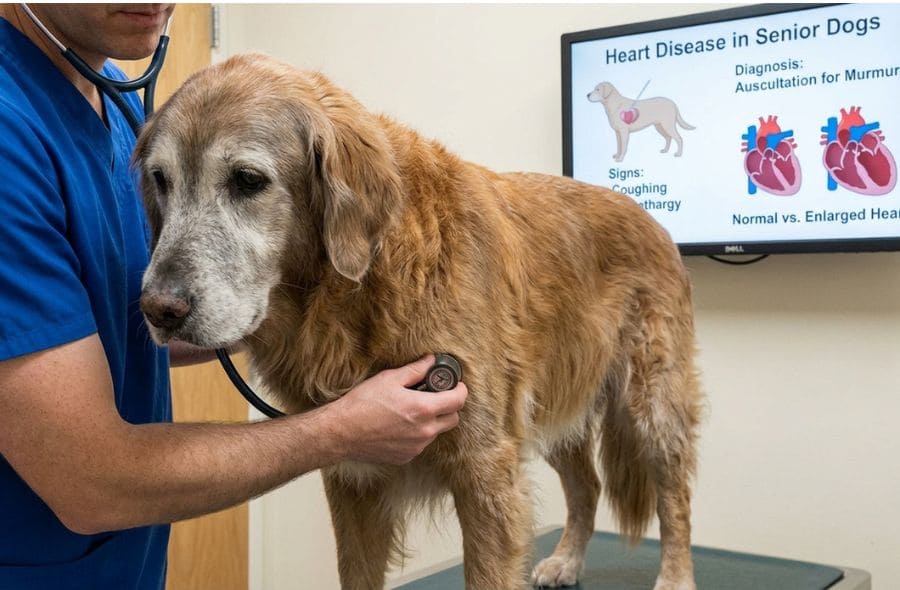
Listening with a stethoscope comes first, since most valve problems produce a distinctive heart murmur or irregular rhythm a vet can detect immediately during a routine exam.
Chest X-rays show the size and shape of the heart and can reveal fluid accumulation in or around the lungs, which is often the clearest confirmation of congestive heart failure.
An echocardiogram, essentially an ultrasound of the heart, is the most detailed tool available, letting a cardiologist see exactly which valve or chamber is affected and how severely.
According to the American Kennel Club, a heart murmur can sometimes be detected years before actual heart failure develops, which is exactly why routine senior wellness exams matter even in dogs who seem perfectly healthy.
💡 Vet Technician Note: If your vet mentions hearing a heart murmur during a routine visit, try not to panic. Plenty of dogs live for years with a mild murmur and no symptoms at all. It’s a signal to monitor more closely, not necessarily a diagnosis of heart failure itself.
Proven Ways to Help a Dog With Heart Disease
There’s no cure for most forms of canine heart disease, but there’s genuinely a lot that helps slow its progression and keep a dog comfortable for a long time.
Medication Makes a Real Difference
Diuretics help remove excess fluid, while ACE inhibitors and newer medications like pimobendan help the heart pump more efficiently. Consistency matters enormously here, since missed doses can allow fluid to build up quickly.
A Lower-Sodium Diet
Excess sodium encourages fluid retention, which is exactly what a struggling heart doesn’t need. Many prescription cardiac diets are specifically formulated around this, and your vet can recommend one suited to your dog’s stage of disease.
Gentle, Consistent Exercise
Complete rest usually isn’t necessary or recommended for dogs with stable, well-managed heart disease. Shorter, gentler walks that avoid overexertion tend to work better than either intense activity or total inactivity.
Watching for Medication Interactions
If your dog also has arthritis or kidney disease, some medications for those conditions can interact with heart medications or place additional strain on the kidneys. Always keep your vet fully updated on every condition and medication your dog is managing.
Tracking Resting Respiratory Rate at Home
Many veterinary cardiologists ask owners to count breaths per minute while their dog sleeps, a simple, free way to catch early signs of fluid buildup before a dog seems visibly unwell.
💡 Vet Technician Note: Never give your dog human heart medications or supplements without your vet’s explicit guidance. Dosing for dogs is entirely different, and several human cardiac medications are genuinely dangerous for dogs even in small amounts.
When to See a Vet Right Away
Some symptoms warrant same-day or emergency veterinary attention rather than a wait-and-see approach:
- Sudden difficulty breathing or rapid, labored breaths
- Pale, gray, or bluish gums
- Collapse or fainting, even briefly
- A cough that suddenly worsens or produces foam
- Any combination of the 7 signs above appearing together, suddenly
Per PetMD, dogs experiencing moderate to severe signs of congestive heart failure may need hospitalization and immediate care, which is exactly why breathing difficulty should never be treated as something to monitor overnight at home.
Quick Reference: Managing Heart Disease in Senior Dogs
| Situation | What Helps |
|---|---|
| New persistent cough, especially at night | Schedule a vet visit; don’t assume it’s minor |
| Heart murmur found during routine exam | Ask about monitoring frequency and an echocardiogram |
| Diagnosed with early-stage heart disease | Discuss a lower-sodium diet with your vet |
| On daily heart medication | Never skip doses; set a consistent daily reminder |
| Also managing arthritis or kidney disease | Confirm all medications are safe together |
| Sudden breathing difficulty or collapse | Emergency vet visit, don’t wait it out at home |
Frequently Asked Questions
Can heart disease in senior dogs be cured? No, most forms of canine heart disease aren’t curable, but they’re very manageable. Many dogs live comfortably for a year or more with consistent medication, diet changes, and monitoring after diagnosis.
Is a heart murmur the same as heart failure? No, a heart murmur simply means a vet hears an abnormal sound caused by turbulent blood flow through a valve. Many dogs live for years with a mild murmur and no symptoms before, if ever, developing actual heart failure.
What is the life expectancy of a senior dog with congestive heart failure? It varies significantly based on the stage at diagnosis and how well a dog responds to treatment. Dogs diagnosed early and managed consistently often live comfortably for a year or more, while more advanced cases may have a shorter timeline.
Can diet alone manage heart disease in dogs? Diet is an important piece, particularly sodium restriction, but it’s rarely sufficient on its own. Most dogs with diagnosed heart disease need a combination of medication, dietary changes, and regular monitoring rather than diet changes alone.
How can I tell if my dog’s cough is heart-related or something else? You genuinely can’t tell for certain without a vet exam, since kennel cough, tracheal collapse, and allergies can all look similar from the outside. A cough that’s persistent, worse at night, or paired with any of the other signs here is worth mentioning at your next vet visit rather than assuming it’s minor.
This article is for general informational purposes and is not a substitute for professional veterinary advice. If your senior dog develops a persistent cough or breathing difficulty, please consult your veterinarian promptly. See our Medical Disclaimer for more information.
PawzyVibe participates in the Amazon Services LLC Associates Program. If you purchase through links on this page, we may earn a small commission at no extra cost to you. We only recommend products we genuinely believe help senior dogs.