
Last updated: October 2026
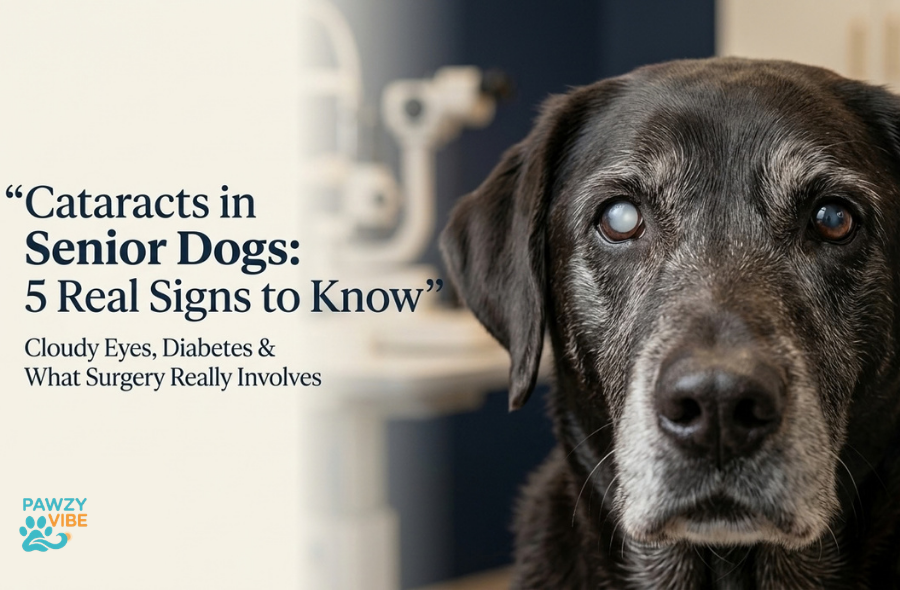
Noticing a cloudy, bluish, or white haze in your senior dog’s eyes is unsettling — is this just aging, or are they losing their sight? Cataracts in senior dogs are one of the most common reasons for this change, and they’re also the single most common treatable cause of blindness in dogs.
The tricky part is that not every cloudy eye is a cataract. A very similar-looking, completely harmless condition affects nearly every aging dog’s eyes at some point, and telling the two apart matters enormously for how you respond.
This guide covers how to spot the difference, why diabetes raises cataract risk dramatically, and what treatment — including surgery — actually looks like.
What Causes Cataracts in Senior Dogs?
A cataract is a clouding of the eye’s lens caused by changes in its protein structure, which blocks light from properly reaching the retina. Unlike normal aging changes, cataracts genuinely impair vision and can progress to complete blindness if left untreated.
Cataracts are described as immature when only part of the lens is affected, or mature when the entire lens has become opaque. The speed of progression varies enormously depending on the cause — and as we’ll cover below, some progress far faster than others.
💡 Vet Technician Note: Cataracts themselves aren’t painful. If your dog’s eye looks red, irritated, or like it’s bothering them, that points toward a secondary complication like inflammation or glaucoma, which needs prompt attention rather than a routine wait-and-see approach.
Cataracts vs. Nuclear Sclerosis: The Confusion Everyone Has
This is genuinely the most common mix-up in senior dog eye health, and for good reason — both conditions cause cloudy-looking eyes.
Nuclear sclerosis (also called lenticular sclerosis) is a normal aging change found in the vast majority of dogs over age 7. It gives the lens a bluish-gray haze but causes little to no meaningful vision loss, and it needs no treatment at all.
Cataracts, on the other hand, look more distinctly white or opaque, genuinely impair vision, and can progress toward blindness.
| Feature | Nuclear Sclerosis | Cataracts |
|---|---|---|
| Appearance | Bluish-gray haze | White, opaque |
| Vision impact | Minimal to none | Significant, can cause blindness |
| Both eyes affected | Usually, evenly | Often, sometimes uneven |
| Treatment needed | None | Surgery, if vision loss is significant |
| Common age | Most dogs over 7 | Often 6–8+, or any age with diabetes |
The two conditions can look nearly identical to an untrained eye, and even veterinarians rely on a proper ophthalmoscopic exam to tell them apart with confidence. If your dog has one, your vet will also want to keep watching for the other, since it’s common for dogs with nuclear sclerosis to eventually develop cataracts as well. This overlap is exactly why cataracts in senior dogs get missed or dismissed as “just getting older” for so long.
Why Diabetes Dramatically Raises Cataract Risk
This is one of the most important connections in senior dog health: diabetic dogs develop cataracts at a remarkably high rate, often quite rapidly after diagnosis, as excess sugar affects the lens directly.
If your dog has diabetes, regular eye checks aren’t optional extras — they’re a core part of managing the disease, since cataracts can develop within months of a diabetes diagnosis rather than the slower timeline typical of age-related cataracts.
💡 Vet Technician Note: If your diabetic dog’s blood sugar isn’t well controlled, mention any changes in vision to your vet right away. Cataract surgery is generally more successful once diabetes is well regulated first, so getting the underlying disease under control matters just as much as the eye itself.
Other Causes and Risk Factors
Beyond aging and diabetes, cataracts can also result from:
- Genetics and breed predisposition — Poodles, Cocker Spaniels, and Bichon Frises are among the breeds more prone to inherited cataracts
- Eye trauma or injury
- Chronic eye inflammation or other underlying eye disease
Symptoms to Watch For
Spotting cataracts in senior dogs early usually comes down to noticing small behavior shifts before the cloudiness itself becomes obvious:
- A visibly white or cloudy appearance to the pupil
- Bumping into furniture or hesitating around obstacles
- Increased caution on stairs or in dim lighting
- Reluctance to jump onto furniture or into the car
- General clumsiness that seems new
Since these symptoms overlap with vision loss in senior dogs more broadly, a proper eye exam is the only reliable way to confirm cataracts specifically rather than another cause of declining sight.
How Vets Diagnose Cataracts
Diagnosis typically involves:
- A thorough ophthalmoscopic eye exam
- Classification as immature or mature, and which portion of the lens is affected
- Bloodwork to check for diabetes if it hasn’t already been diagnosed
- For dogs being considered for surgery, additional testing such as an electroretinogram to confirm the retina itself is still healthy enough to benefit from restored vision
Treatment: Is Surgery the Only Option?
Surgery is currently the only way to actually reverse cataract-related vision loss. The most common procedure, phacoemulsification, uses ultrasound energy to break up the clouded lens so it can be removed, sometimes followed by an artificial lens implant.
For dogs who aren’t good surgical candidates — due to other health conditions or anesthesia risk — many adapt remarkably well to vision loss at home with consistent furniture placement, dog ramps instead of unpredictable steps, and non-slip socks for extra grip as their confidence adjusts.
Since cataract surgery requires your dog to be fully anesthetized, it’s worth reading our guide on anesthesia in senior dogs to understand how age-related risk is managed for this kind of procedure.
A Real-Life Scenario
When Sandra noticed her 9-year-old diabetic Dachshund, Pepper, suddenly bumping into her water bowl and hesitating at the top of the stairs, she assumed it was just old age catching up. A vet visit revealed rapidly progressing diabetic cataracts — and once Pepper’s blood sugar was better regulated, she became a strong candidate for successful cataract surgery months later. Pepper’s story is a good reminder of how fast cataracts in senior dogs can progress once diabetes enters the picture.
Cataracts Action Checklist
| If You Notice… | Do This |
|---|---|
| A bluish, even haze in both eyes | Likely nuclear sclerosis — mention it at your next checkup, but don’t panic |
| A white, opaque appearance to the pupil | Schedule an eye exam to check for cataracts |
| Your dog has diabetes | Ask about regular eye screening as part of ongoing management |
| Bumping into furniture or hesitating on stairs | Get an eye exam, and consider ramps and consistent furniture placement in the meantime |
| Redness or apparent eye pain alongside cloudiness | See a vet promptly — this may signal a complication like glaucoma |
| Considering surgery | Discuss anesthesia readiness and retina health testing with your vet |
Frequently Asked Questions
Are cataracts in senior dogs the same thing as cloudy eyes from normal aging? Not usually. Nuclear sclerosis causes a bluish, even haze with little vision impact, while cataracts look more distinctly white and genuinely affect vision. A vet exam is the only reliable way to tell them apart.
Are dogs with diabetes more likely to get cataracts? Yes, significantly. Diabetic dogs often develop cataracts rapidly, sometimes within months of diagnosis, making regular eye checks an important part of diabetes management.
Is cataract surgery in dogs worth it? For many dogs, yes — success rates are generally good when the retina is healthy and the dog is a suitable anesthesia candidate. It’s a personal and medical decision best made together with your vet.
Can a dog live a good life with untreated cataracts? Often, yes. Many dogs adapt well to vision loss with consistent home layouts, ramps, and patience, especially when hearing and smell remain intact.
Do cataracts hurt dogs? Cataracts themselves aren’t painful, but complications like inflammation or glaucoma can be, so any redness or apparent discomfort alongside cloudy eyes should be checked promptly.
“Spotting early signs of cataracts in senior dogs helps you make timely decisions with your veterinarian.”
Medical Disclaimer: This article is intended for informational purposes only and is not a substitute for professional veterinary diagnosis, advice, or treatment. If you notice changes in your dog’s eyes or vision, please consult a veterinarian or veterinary ophthalmologist.
Amazon Affiliate Disclosure: PawzyVibe is a participant in the Amazon Services LLC Associates Program, an affiliate advertising program designed to provide a means for sites to earn advertising fees by advertising and linking to Amazon.com. As an Amazon Associate, we earn from qualifying purchases at no additional cost to you.