
Last updated: September 2026
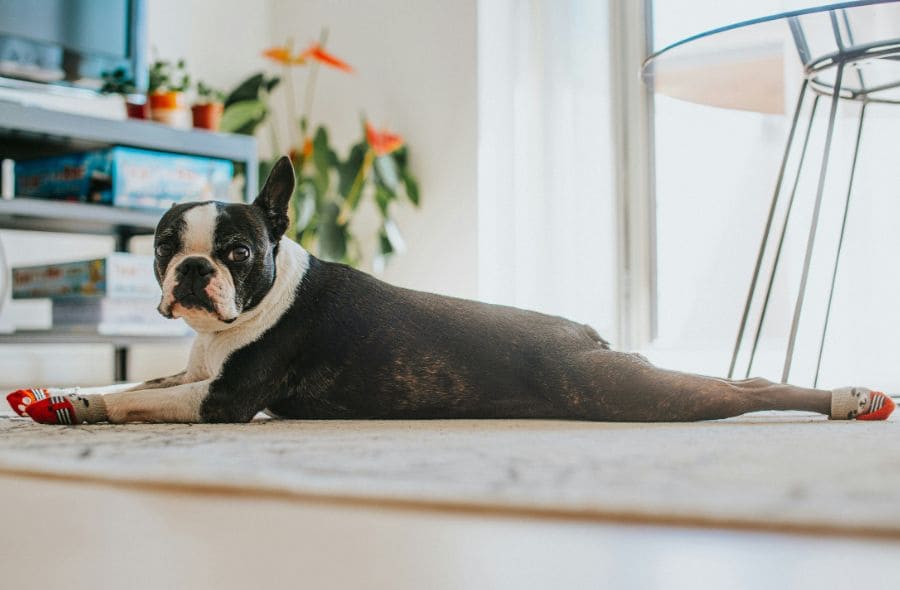
Watch your senior dog walk across your kitchen floor. Really watch. Do their back legs slide out slightly before they catch themselves? Do they hesitate at the edge of the hardwood before crossing it?
If you’ve never noticed this before, start paying attention. Slipping on smooth floors is one of the most overlooked daily stresses for senior dogs — and it’s a bigger deal than most owners realize.
Non-slip socks for senior dogs exist for exactly this reason. They’re not a fashion accessory. For a dog with arthritis, weak back legs, or general instability, the right pair can be the difference between confident walking and a genuinely scary fall.
This guide covers why senior dogs struggle with traction in the first place, what actually makes non-slip socks work, and how to pick a pair your dog will actually keep on.
Why Senior Dogs Struggle With Slippery Floors
This isn’t really about the floor. It’s about what’s changed in your dog’s body.
Paw pads thin with age. The cushioned pads on a dog’s feet naturally provide grip, but that padding thins over the years, reducing the natural traction your dog once had without even trying.
Nails grow longer and change the angle of the paw. Older dogs are often less active, which means nails wear down less naturally. Longer nails push the paw pad up and away from the surface, reducing contact and grip exactly when it’s needed most.
Muscle mass decreases. Less muscle means less control and less strength to correct a slip before it becomes a fall. A younger dog might catch themselves instantly. A senior dog with weaker hindquarters may not react fast enough.
Joint pain changes how dogs move. A dog compensating for a sore hip or shoulder often shifts their weight unevenly, which makes them more likely to slip in the first place — and less able to recover gracefully if they do. This is one of the reasons recognizing pain signs in senior dogs matters — a dog favoring one leg is often more likely to slip. “This is why introducing non-slip socks for senior dogs early on can protect their joints before a major fall occurs.”
Put those four things together, and a floor that was never a problem for five years suddenly becomes a source of real anxiety — for your dog and for you.
Why a Single Slip Can Matter More Than You’d Think
A fall isn’t just a scary moment. For a senior dog, it can cause real injury — a strained muscle, a worsened joint, or in more serious cases, a fracture in a dog with weakened bones.
But there’s a second cost that’s less obvious: fear. A dog who slips badly even once often becomes hesitant to cross that floor again. That hesitation can spiral — a dog who’s afraid to walk confidently through their own home is a dog whose quality of life takes a real hit, even if they’re never physically injured again.
This is why non-slip socks aren’t just about preventing a single dramatic fall. They’re about restoring a dog’s confidence to move through their own space without fear.
That is why using non-slip socks for senior dogs early on helps maintain their independence before anxiety sets in.
What Actually Makes Non-Slip Socks for Senior Dogs Work
Not all non-slip socks for senior dogs are created equal. Here’s what separates the ones that genuinely help from the ones that end up chewed off and abandoned in a corner.
Grip Material on the Sole
When evaluating non-slip socks for senior dogs, the sole is everything. Look for options with a rubberized or silicone grip pattern across the entire bottom surface — not just a few dots or a thin coating that wears off within weeks.
Textured, raised grip patterns (ridges, paw-print patterns, or crosshatch designs) generally outperform smooth rubber coatings, especially on very smooth surfaces like tile or hardwood.
A Secure, Adjustable Fit
This is where most cheap options fail. A sock that’s too loose bunches up, slides down, or falls off within minutes. A sock that’s too tight cuts off circulation or bothers your dog enough that they’ll try to chew it off.
Look for:
- Adjustable straps (velcro closures work well) rather than simple pull-on elastic
- Breathable fabric that stretches slightly for comfort
- A snug ankle fit that stays put during normal movement
Breathable, Washable Fabric
Your dog will be wearing these for hours at a time, potentially daily. Fabric that doesn’t breathe can cause sweating and irritation between the paw pads. Machine-washable materials matter too — these will get dirty fast, and hand-washing dog socks daily isn’t realistic for most owners.
Sized Correctly (This Matters More Than You’d Expect)
Dog paws vary enormously in width and shape, not just length. A sock sized only by your dog’s weight, without an actual paw measurement, is a guess. Most quality brands provide a paw-tracing or measuring guide — use it. A properly fitted sock stays on; a poorly fitted one becomes an expensive toy for your dog to destroy.
How to Get Your Dog to Actually Wear Them
Even the best non-slip socks are useless if your dog spends the first ten minutes trying to shake them off, then chews them to shreds the moment you look away. Here’s what actually helps with the adjustment period. “Getting used to non-slip socks for senior dogs takes a bit of patience, but a few simple habits make the transition smooth.”
Start with short sessions. Put the socks on for five to ten minutes at a time, with treats and praise, rather than expecting your dog to accept them all day immediately.
Distract during the first few wears. A favorite toy, a short walk, or a puzzle feeder gives your dog something to focus on besides the strange new feeling on their feet.
Expect the “high-step” walk. Almost every dog does an exaggerated, stiff-legged walk the first few times they wear socks. This is normal and almost always fades within a few days as they adjust to the sensation.
Reward calm behavior, not just compliance. Praise and treat your dog when they’re calmly wearing the socks and walking normally, so they associate the socks with something positive rather than just tolerating them.
Increase wear time gradually. Build up from a few minutes to full walking sessions over several days rather than expecting immediate all-day acceptance.
Some dogs take to socks within a day. Others need a full week or two of patient, gradual introduction. Both are completely normal.
When to Use Traction Socks vs. Other Solutions
Choosing non-slip socks for senior dogs is a great solution, but they are just one tool among several traction options:
Non-slip socks for senior dogs work best for: Dogs who need traction throughout the house, dogs whose nails are difficult to trim short enough for natural grip, or dogs recovering from surgery who need extra stability during a specific healing period. For dogs managing arthritis long-term, socks often work best alongside a supportive orthopedic bed that reduces joint pressure during rest too.
Non-slip rugs or runners work best for: High-traffic pathways (hallway to the door, kitchen to the living room) where you want a permanent solution without relying on your dog wearing something.
Nail trims and paw pad grooming work best for: Dogs whose main issue is overgrown nails or excess fur between the paw pads reducing natural grip — sometimes the simplest fix is the most overlooked one.
Many senior dog owners end up using a combination — non-slip rugs in main walkways, with socks reserved for uncovered hardwood or tile sections, or for days when a dog seems particularly unsteady.
Signs Your Senior Dog Needs Traction Help Now
If you’re not sure whether this is worth addressing, watch for these signs:
- Back legs sliding apart (a “splayed” stance) when standing on smooth floors
- Hesitation or refusal to cross certain rooms , If your dog also hesitates before jumping or seems stiff after resting, it may be worth checking our guide on dog ramps for senior dogs as well — reducing overall physical strain often helps with confidence across the board.
- Visible anxiety before walking across tile or hardwood
- A recent fall or near-fall on a smooth surface
- Reduced confidence moving through the house compared to a few months ago
Any one of these is worth addressing. Several together mean it’s genuinely time to make a change, not just something to keep an eye on.
Frequently Asked Questions About Non-Slip Socks for Senior Dogs
Do non-slip socks for senior dogs actually work, or is it a gimmick? Yes, quality non-slip socks for senior dogs really do work, provided they are fitted correctly with quality grip material. The key factors are proper sizing and a sole material with real texture, not just a smooth rubber coating. Poorly fitted or low-quality socks are far less effective, which is why quality and fit matter more than price alone.
How long can a dog wear traction socks each day? Most dogs can comfortably wear well-fitted socks for several hours at a time, especially during walks or active periods indoors. It’s a good habit to remove them periodically to let paws breathe and to check for any irritation, particularly if your dog is new to wearing them.
My dog keeps shaking the socks off. What am I doing wrong? This is almost always a fit or introduction issue rather than the socks being a bad idea. Double-check the sizing against your dog’s actual paw measurements, make sure the closure is snug but not tight, and go back to short, positive practice sessions rather than expecting all-day wear right away.
Are non-slip socks better than paw wax or grip sprays? They serve different purposes. Paw wax and grip sprays work directly on the paw pad and can help with mild traction issues, but they wear off within hours and need frequent reapplication. Socks provide more consistent, longer-lasting traction, especially for dogs with more significant mobility challenges.
Can non-slip socks help with arthritis specifically? Indirectly, yes. They won’t treat the arthritis itself, but by preventing slips and falls, they reduce the risk of a dog re-injuring an already painful joint through an awkward catch or fall — which is a real and common risk for arthritic senior dogs on smooth flooring.
What size socks does my senior dog need? Trace your dog’s paw on a piece of paper while they’re standing with weight on it, then compare the measurement to the specific brand’s sizing chart — sizing varies between brands, so don’t rely on weight alone. A paw that’s even slightly too big or small for the sock will affect both fit and how well the socks stay on.
Investing in the right non-slip socks for senior dogs is a simple change that can restore your dog’s confidence and prevent dangerous slips in their daily life.
This article is for general informational purposes and is not a substitute for professional veterinary advice. If your dog is experiencing frequent falls or significant mobility changes, please consult your veterinarian. See our Medical Disclaimer for more information.
PawzyVibe participates in the Amazon Services LLC Associates Program. If you purchase through links on this page, we may earn a small commission at no extra cost to you. We only recommend products we genuinely believe help senior dogs.