
Last updated: October 2026
Walk down any pet store aisle and you’ll see it everywhere: bags stamped “Senior,” “Mature,” “7+,” as if there’s some official rulebook behind them. There isn’t. Finding the best dog food for senior dogs has almost nothing to do with that word on the front of the bag, and almost everything to do with what’s actually inside it.
That surprises most owners. It surprised us too, the first time we dug into how these formulas actually get made.
This guide walks through what senior dogs genuinely need nutritionally, clears up the biggest myth in the space (protein), and gives you a real framework for choosing food instead of trusting a marketing label.
Best Dog Food for Senior Dogs: Does Your Aging Dog Actually Need It?
Here’s the part that catches people off guard. AAFCO — the body that sets pet food nutrient standards — only recognizes two life stages: growth/reproduction and adult maintenance. There’s no official “senior” category at all.
That means any company can slap “senior” on a bag and formulate it however they want. One senior food might run 250 calories a cup. Another might run 400. Nothing requires them to match.
None of that makes senior-labeled food bad. Plenty of it is genuinely well-formulated. It just means the label alone tells you almost nothing, and age by itself isn’t a great reason to switch foods.
💡 Vet Technician Note: Don’t feel pressured to switch your dog to a “senior” formula the day they turn seven. What matters is how your individual dog is doing — their weight, energy, coat, stool quality — not a number on a calendar.
Protein: The Biggest Myth in Senior Dog Nutrition
When looking for the best dog food for senior dogs, understanding protein needs is critical, as it is one of the most misunderstood topics in canine nutrition. For years, the assumption was that older dogs need less protein to “protect” their kidneys. Most current veterinary nutrition guidance says the opposite.
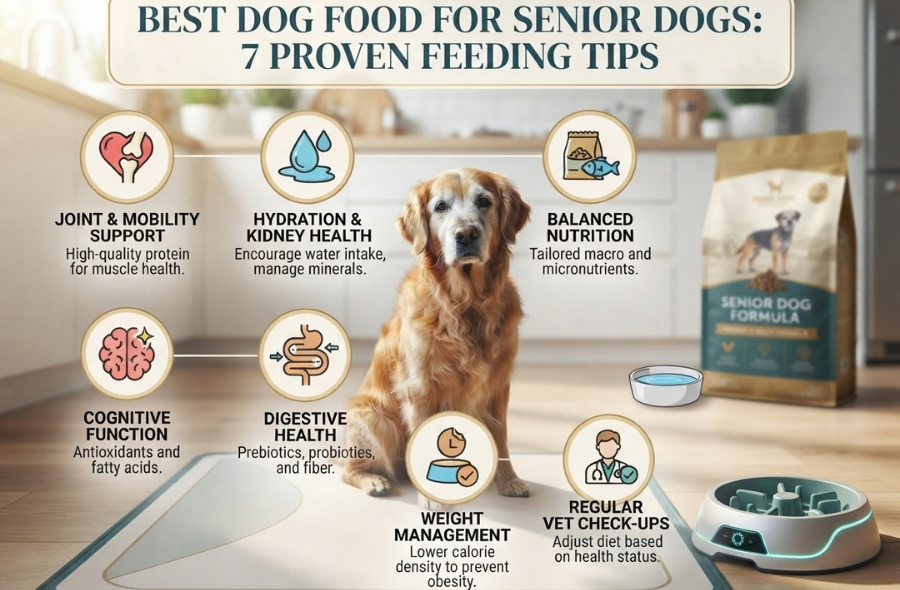
Healthy senior dogs lose lean muscle mass as they age — a process called sarcopenia. Adequate, high-quality protein is one of the main tools for slowing that down, not something to restrict. AAFCO’s adult maintenance minimum sits at 18% crude protein on a dry-matter basis, and that’s a floor, not a target worth aiming for.
The exception matters, though: dogs with diagnosed kidney disease genuinely do need a therapeutic, vet-prescribed lower-protein diet. That’s a medical decision for a specific diagnosis, not a blanket rule for every dog past a certain birthday.
💡 Vet Technician Note: If your senior dog hasn’t been diagnosed with kidney disease, don’t preemptively restrict their protein “just in case.” That’s one of the most common well-meaning mistakes we see, and it can actually accelerate muscle loss.
Key Nutrients to Look For
When evaluating the best dog food for senior dogs, a handful of key ingredients consistently show up in formulas that veterinarians recommend:
- Named animal protein first on the ingredient list — chicken, salmon, or lamb, not vague “meat meal”
- Omega-3 fatty acids (EPA and DHA, usually from fish oil) for joint support and cognitive health — this overlaps directly with our guide to joint supplements
- Glucosamine and chondroitin, often added directly to senior formulas for hip and joint support
- Antioxidants like vitamin E and C, which play a role in supporting brain health as dogs age
- Moderate, digestible fiber for consistent digestion, which pairs well with the gut-health approach in our probiotics guide
Wet vs. Dry vs. Fresh: Which Format Is Best for Senior Dogs?
Choosing the best dog food for senior dogs in terms of format (wet, dry, or fresh) depends entirely on your dog’s individual health and dental needs.
Wet food brings extra hydration to every meal, which genuinely helps dogs managing kidney concerns or general dehydration risk. It’s also often easier to eat for dogs with dental pain.
Dry kibble is convenient and shelf-stable, though it does very little for hydration and can be tough on dogs with significant dental issues.
Air-dried food sits in between — more concentrated nutrition than kibble, easier on sensitive teeth than some raw options, and gently processed. We cover this format in depth in our guide to air-dried dog food if you want to go further.
Plenty of owners land on a mix — dry as the base, a spoonful of wet stirred in for palatability and moisture. There’s nothing wrong with that.
Special Diets for Specific Health Conditions
If your senior dog has a diagnosed condition, general “best senior food” advice takes a back seat to what your vet prescribes for that specific issue:
- Kidney disease — lower phosphorus, controlled protein, prescription renal diets
- Weight management — calorie-controlled formulas, often higher in fiber for satiety, tied closely to our weight loss guide
- Diabetes — consistent carbohydrate content and feeding schedule, managed alongside insulin therapy
- Liver conditions — copper-restricted, easily digestible formulas
Prescription therapeutic diets exist for a reason. If your dog has one of these diagnoses, that food isn’t optional or interchangeable with whatever’s on sale.
A Real-Life Scenario
Renata had been feeding her 11-year-old Beagle mix, Cooper, a reduced-protein “senior” kibble for years, assuming it was protecting his kidneys. When his annual bloodwork came back completely normal and he’d noticeably lost muscle tone along his spine, her vet suggested switching to a higher-protein formula built around real meat. Within a couple of months, Cooper looked visibly more filled out, and his energy on walks picked back up.
Signs Your Senior Dog’s Current Diet Isn’t Working
Watch for these red flags, whatever food you’re currently feeding:
- Dull, flaky coat or excessive shedding
- Noticeable muscle loss along the spine or hips
- Digestive upset — soft stool, gas, or inconsistency
- Sudden weight gain or loss without a diet change
- Declining interest in meals
Persistent appetite changes deserve a vet visit before you start swapping foods on your own, since they can point to something bigger going on.
Senior Dog Food Checklist
| If You Notice… | Do This |
|---|---|
| A “senior” label with no other info | Check the ingredient list and guaranteed analysis instead of trusting the word alone |
| Muscle loss or a bony spine/hips | Ask your vet whether a higher-protein formula fits your dog |
| A diagnosed condition (kidney, diabetes, liver) | Follow the prescription diet your vet recommends — don’t substitute a retail food |
| Dental pain or reluctance to chew | Consider wet food, air-dried food, or softened kibble |
| Dry coat or joint stiffness | Look for omega-3s, glucosamine, and chondroitin in the ingredient list |
| Any sudden appetite change | Book a vet visit before switching foods |
Frequently Asked Questions
Is “senior” dog food actually different from regular adult food? Sometimes, but there’s no official standard requiring it. AAFCO only recognizes adult maintenance and growth life stages, so senior formulas vary enormously between brands — check the ingredients, not just the label.
Does the best dog food for senior dogs contain less protein? Generally, no. The best dog food for senior dogs should provide adequate to higher protein levels to help offset natural muscle loss, unless your dog has a diagnosed kidney condition.
What’s the best food format for a senior dog with bad teeth? Wet food, air-dried food, or softened kibble are usually easier and more comfortable than hard, dry kibble for dogs with dental pain.
How do I know if I should switch my senior dog’s food? Watch for muscle loss, coat changes, digestive issues, or appetite shifts rather than switching based on age alone. A vet visit can help confirm whether a diet change is actually needed.
Should I feed a prescription diet if my senior dog doesn’t have a diagnosed condition? No. Prescription therapeutic diets are formulated for specific medical conditions and aren’t necessary — or always appropriate — for a healthy senior dog.
Medical Disclaimer: This article is intended for informational purposes only and is not a substitute for professional veterinary or nutritional advice. Please consult your veterinarian before making significant changes to your senior dog’s diet, especially if they have an existing health condition.
Amazon Affiliate Disclosure: PawzyVibe is a participant in the Amazon Services LLC Associates Program, an affiliate advertising program designed to provide a means for sites to earn advertising fees by advertising and linking to Amazon.com. As an Amazon Associate, we earn from qualifying purchases at no additional cost to you.